
Featuring an innovative design, this pump is available in low and high-pressure versions and conforms to API 675 standards. It comes with a standard single diaphragm or an optional double diaphragm with rupture detection for added safety. Automatic control of stroke length and speed is also available for enhanced efficiency.
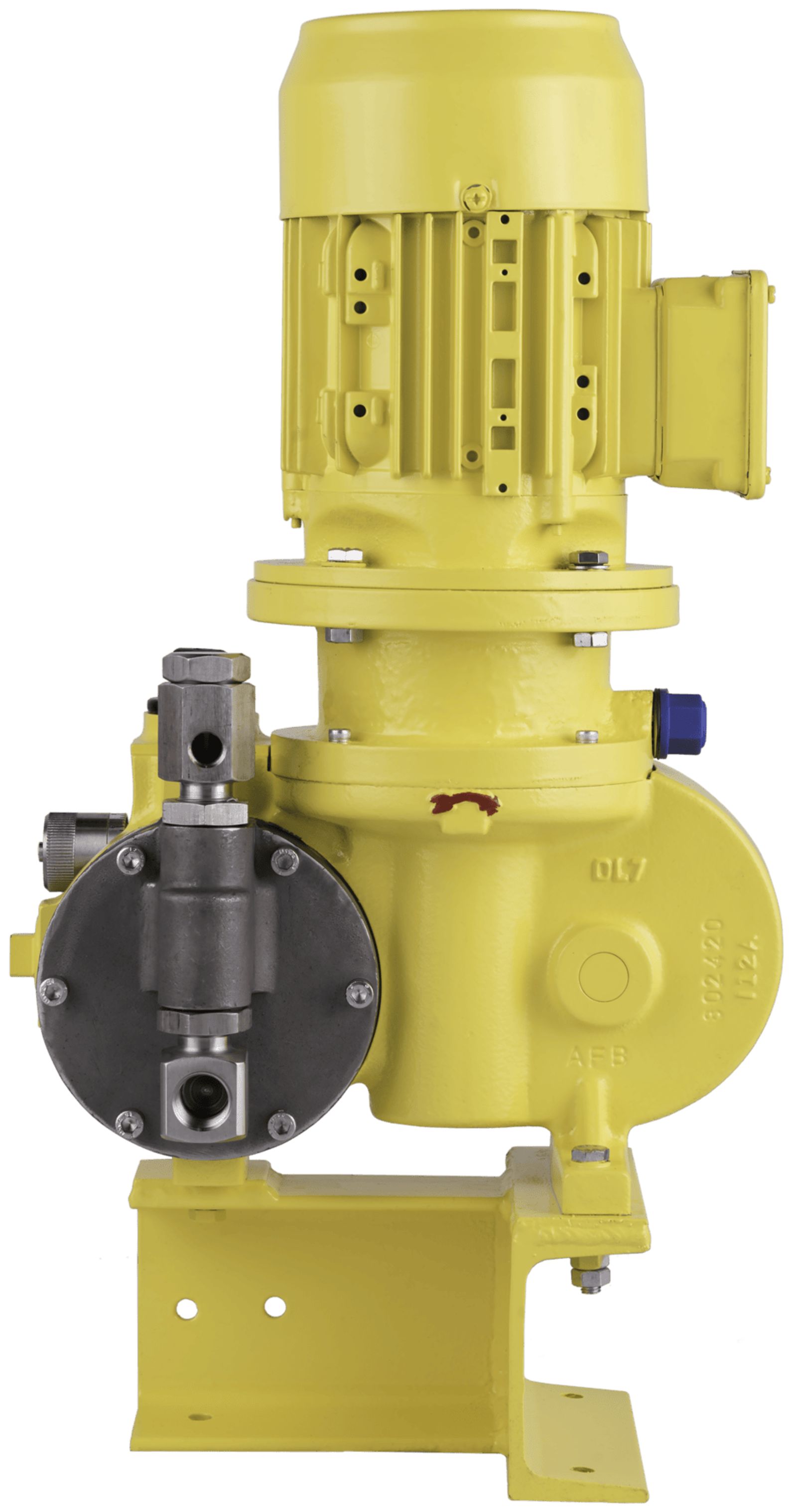
Improved component durability, easier to prime, performs more efficiently and it is safer and simpler to maintain.
The liquid end has been specifically designed for optimal chemical delivery. Available in metallic or non-metallic materials, the liquid end features a high-quality double ball check valve for repeatability and accuracy, micrometer capacity control for precise dosage adjustment, and a bleed system for safer maintenance and easier commissioning.
- Material (liquid end): 316SS / Alloy 20 / Alloy C22 / Titanium / PVC / PVDF
- Pressure max: 3000 psi / 137.9 bar (metallic liquid end); 150.3 psi / 10 bar (plastic liquid end)
- Flow max: 85 gph / 321.7 lph (metallic liquid end); 85 gph / 321.7 lph (plastic liquid end)
- Multiplex: Duplex only
- Flow variation control: Manual / Remote
- Certifications: API 675, ATEX
The most common applications include the injection of chemicals such as coagulants, biocides, disinfectants, polymers, softening agents, acids and bases for pH control, scale and corrosion inhibitors, oxygen scavengers, process additives, and many more.
Water and wastewater treatment: Water and wastewater must be treated efficiently, cost-effectively and within the appropriate quality standards. Not only can pumps effectively and safely deliver a wide range of chemical additives, they are well-known for their reliability. With preventative maintenance, these metering pumps can perform at peak levels for decades, leading to less shutdowns and long-term cost benefits.
Chemical and petrochemical processing: The durable design of the pump enables it to effectively withstand the toxic nature of processing fluids while its flow control capability can endure temperature and pressure variations during production.
Oil and gas production: pumps are ideal for onshore oil and natural gas production because it can consistently inject methanol, corrosion inhibitors, oxygen binders, and other corrosive substances in the harshest conditions in the most remote locations.
Other industries include
- Food and beverages industry
- Pharmaceuticals production
- Power generation
- Agriculture
- Pulp and Paper
- Mining