
Products
Resources
miltonroy-logo.jpg

Struggling with Coagulant Mixing Challenges?

Our team is committed to helping you implement flash mixing solutions that guarantee water purity and compliance with industry standards.

Flash Mixing is the process of quickly dispersing a coagulant, such as FeCl3, and PAC, in potable water treatment tanks where a large to extremely large volume of raw water is flowing.

The purpose of flash mixing is to thoroughly mix dirty water with coagulant to effectively treat the water. The coagulant neutralizes the negative electrostatic charges that the impurities carry. As a result, they can no longer repel themselves and can be flocculated in the next step of the treatment process.

This process step is mandatory in any drinking water treatment process. This rapid mixing ensures proper flocculation of suspended particles contained in the dirty water by allowing enabling its agglomeration and depositing the sediment in the flocculation tank. This will leave clean water on the surface.


The Right Mixing Technology

Top entry mixers using axial flow impellers are a preferred mixing technology. They ensure that there is the proper agitation in a full tank volume by respecting several key parameters: pumping flow, chemscale and/or G factor. Top entry agitators can also be equipped with a Variable Frequency Drive (as opposed to Static mixers) to adjust mixer speed (and consequently the mixing intensity) to the actual water quality & flow and ensure the most efficient treatment service.

Sizing a Coagulation Flash Mixer

As rapid mixing in water facilities plays a crucial role, sizing the right equipment can impact the quality of the process. A rapid mixer should perfectly and equally disperse the coagulant within a short amount of time and maximize collisions between particles (impurities) to allow for their neutralization as well as be correctly mechanically designed to withstand the inlet flow.
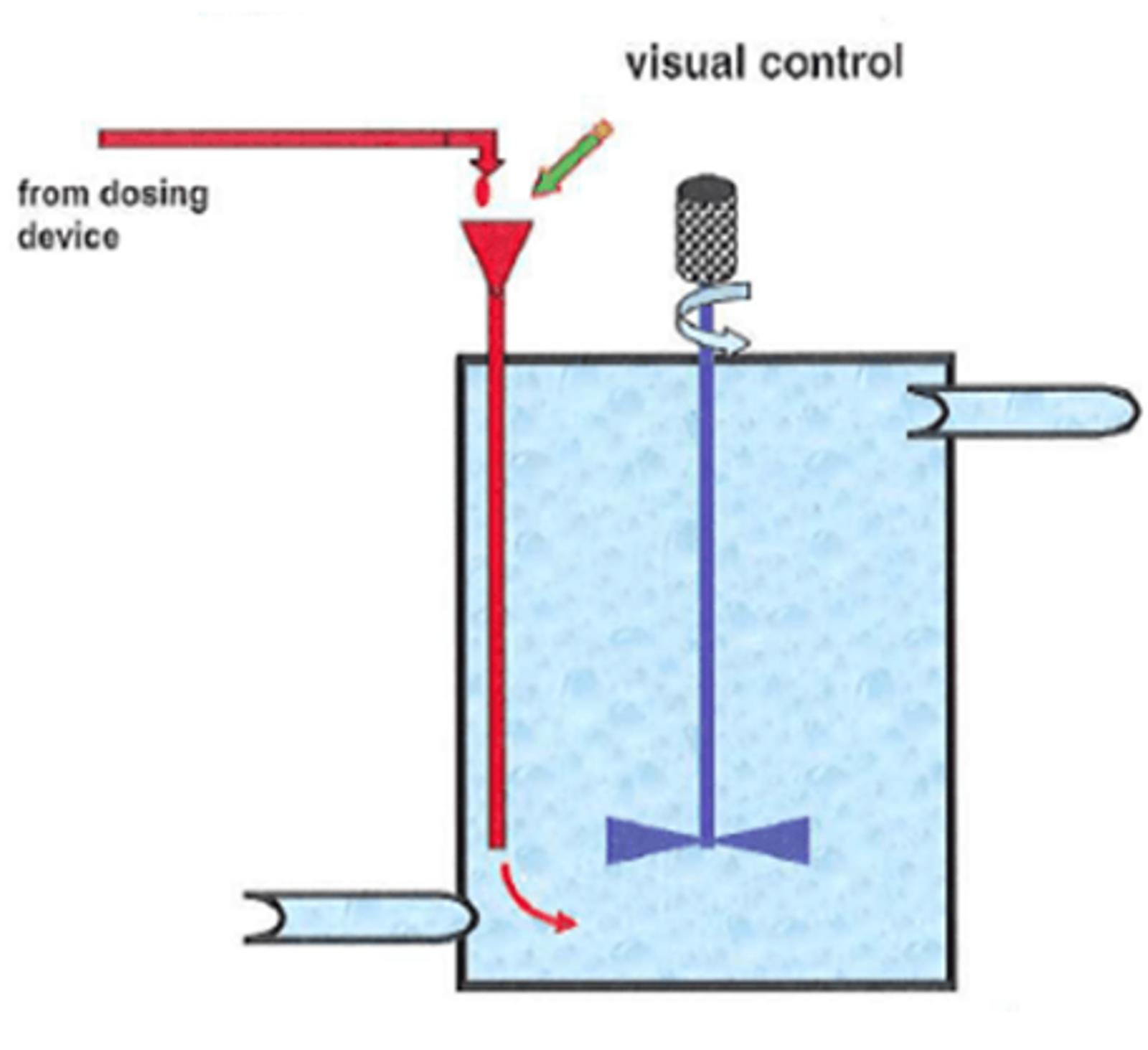
Flash mixing process in water treatment

Milton Roy Equipment for Rapid Mixing

Milton Roy offers a range of dosing pumps characterized by unrivaled accuracy and reliability. Usually installed on a skid, its purpose is to inject the exact quantity of coagulant into the tank for the volume of water that needs to be treated.

Rapid Mixing in the Coagulation Tank vs. Gentle Mixing in the Flocculation Tank

The purpose of rapid mixing is to provide a quick (one minute or less) high agitation level to ensure full homogenization of coagulant in the tank. As a result, particle electric negative loads are neutralized quickly.

For flocculation to occur, currently treated particles need to agglomerate. This can only occur if the negative electric load for most particles involved has been neutralized. As residence time is short in coagulation tanks, the homogenization of coagulant in the tank must be done quickly.

What will Happen if Rapid Mixing is Conducted in the Flocculation Tank?

Rapid mixing creates a much more violent agitation level than what is needed in the flocculation tank. In a flocculation tank, the agitation level must be low to prevent breaking up the flocs that form and settle at the bottom of the tank. Violent agitation in the flocculation tank would prevent flocs from forming.

In addition, rapid mixing could not occur in the flocculation tank because it is a short process that typically lasts no longer than one minute whereas flocculation is a longer and drawn-out process, which usually takes about 15-30 minutes.


Rapid mixing can sometimes yield unexpected results. An alternative solution to implement during the rapid mixing process to avoid this from occurring is to alter some of the existing variables such as efficiency of agitation, agitation level, coagulant quantity, and incoming water flow, among others, to achieve proper coagulation.