Products
Metering Pumps
Process Pumps
Mixers
Systems & Skids
Electronics and Metering
Valves and Accessories
Industries & Applications
Water Treatment
Energy
Pyrolysis Plastics Recycling
Lithium Mining
Essential Oil Extraction
Palm Oil Production
Technology
Metering Pump Technology
Metering Pump Principles
Aftermarket & Support
CARE Maintenance Plans
Spare Parts Inventory
Resources
White Paper
Case Studies
Webinars on Demand
Digital Support Files
Certifications
Milton Roy YouTube Channel
Sales Terms & Conditions
About Us
News
Knowledge Hub
Careers
Sign Up for Newsletter

Renewable Natural Gas (RNG) — also known as biomethane or sustainable natural gas (SNG) — is a pipeline-quality gas produced by upgrading biogas from organic waste decomposition. Certified as an advanced biofuel under the U.S. Renewable Fuel Standard (RFS2) and recognized under the EU's RED III directive, RNG is fully interchangeable with conventional natural gas and represents one of the most scalable pathways to decarbonize the gas grid, heavy transport, and industrial heating.

Milton Roy supports RNG producers at every stage of the value chain — from feedstock preprocessing and anaerobic digestion to biogas upgrading, odorization, and grid injection — with precision metering pumps, dosing systems, and integrated process solutions.

What Is Renewable Natural Gas?

RNG is produced by capturing and upgrading biogas from three primary sources:

1. Agricultural waste: Livestock manure, crop residues, and food processing waste are digested in anaerobic digesters to produce raw biogas (50–70% methane, 30–50% CO₂, plus trace H₂S, siloxanes, and moisture).

2. Landfill gas (LFG): Decomposing municipal solid waste generates landfill gas that can be captured and upgraded to pipeline quality.

3. Wastewater treatment: Sewage sludge digestion in municipal wastewater treatment plants produces biogas as a byproduct of biological treatment.

The upgrading process removes CO₂, hydrogen sulfide (H₂S), siloxanes, volatile organic compounds (VOCs), and moisture to achieve pipeline-quality methane (>95% CH₄), enabling injection into existing gas distribution networks.
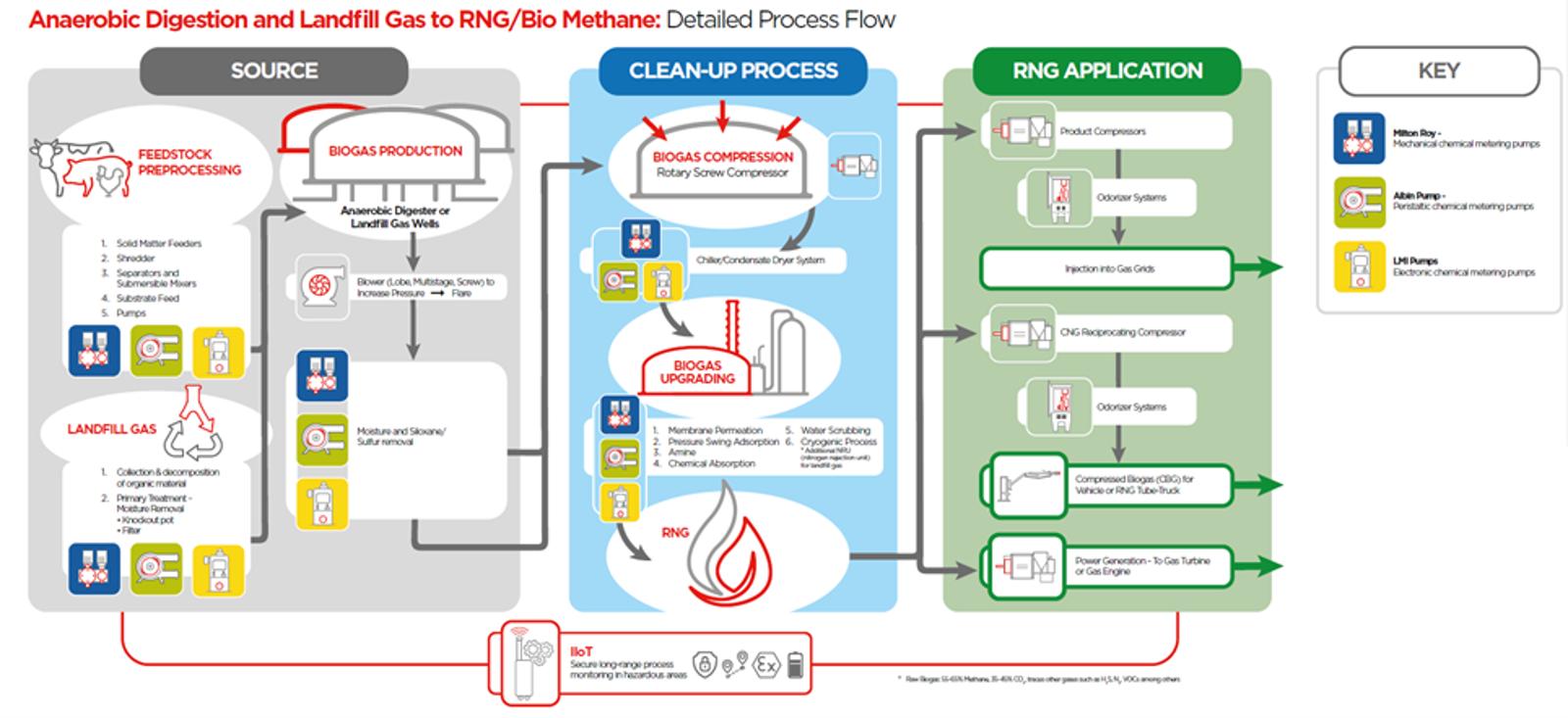
The RNG Production Process — Where Chemical Dosing Matters

Before entering the digester, organic feedstock must be conditioned to optimize biogas yield and protect digester biology:

  • pH adjustment: Injection of acids or bases to maintain optimal pH (6.8–7.2) for methanogenic bacteria
  • Nutrient supplementation: Dosing of trace elements (iron, cobalt, nickel, selenium) to sustain microbial activity
  • Defoaming: Injection of anti-foaming agents to prevent digester overflow
  • Substrate dilution: Water and recirculated digestate mixing to achieve target dry solids content

RNG-process-map

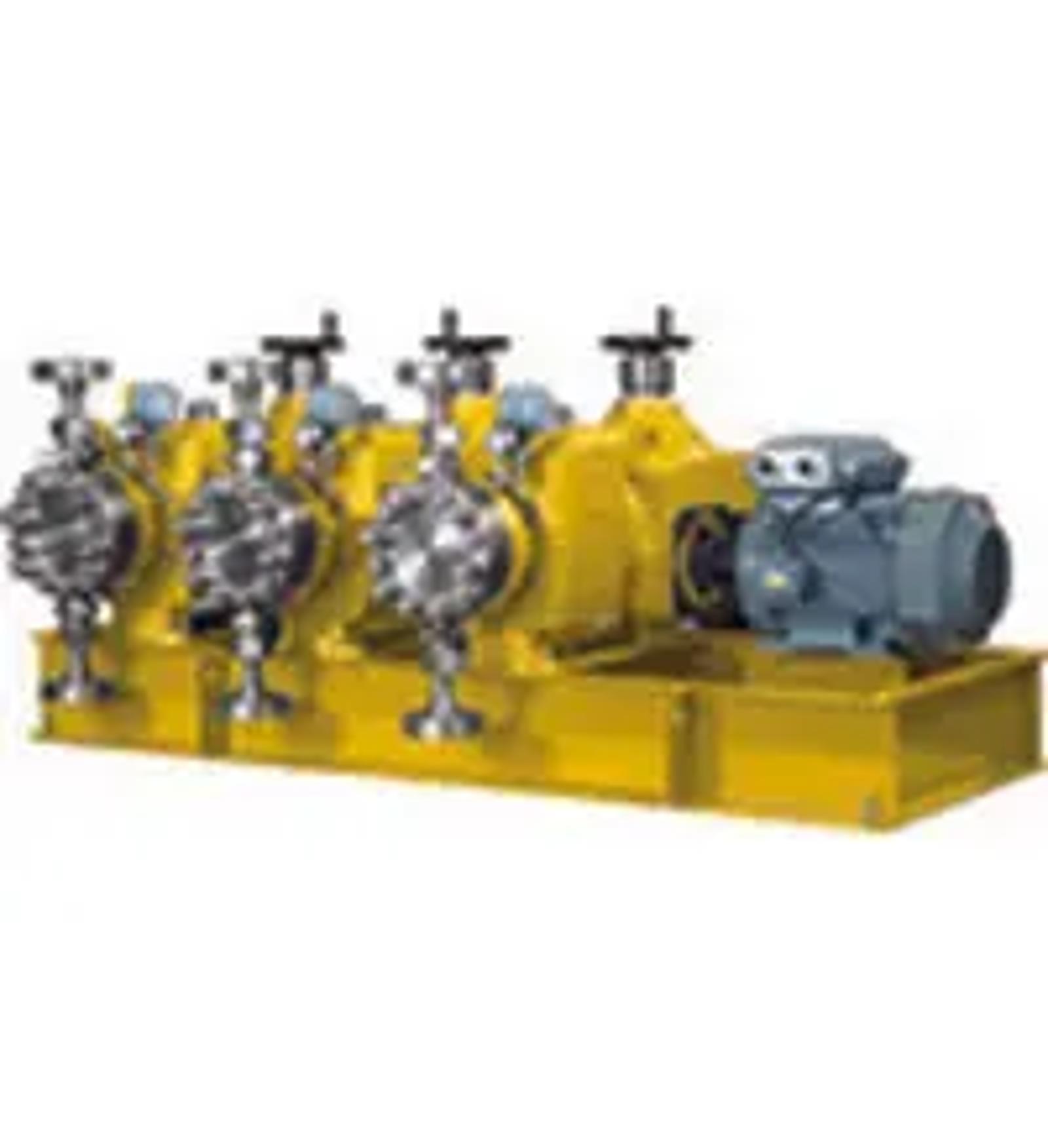
Milton Roy Pump Solutions for RNG