What Applications Use Double Diaphragm Pumps?
With their versatility, reliability, and efficiency, double diaphragm pumps are used in a wide range of applications across various industries. In the chemical industry, they are used for transferring chemicals, solvents, and corrosive liquids. In the food and beverage industry, they are used for transferring food products and liquids as they are hygienic and can handle viscous and shear sensitive fluids without damaging them. Likewise, double diaphragm pumps are applied in the medical and pharmaceutical industries to transfer sensitive fluids that require gentle and precise handling.
The application list is rounded off by the automotive and manufacturing industries, where diaphragm pumps are used for lubrication and fluid transfer. Overall, their ability to handle a wide range of fluids and their self-priming capabilities make them a popular choice for many industrial and liquid transfer applications.
How Does a Double Diaphragm Pump Operate?
When in operation, a double diaphragm pump is similar to a single diaphragm pump as it uses a plunger to move the fluid. The main difference is that a double diaphragm type has two diaphragms that work in tandem to increase the pump's ability to move fluid. This allows the pump to reach higher pressures and flow rates than a single diaphragm pump.
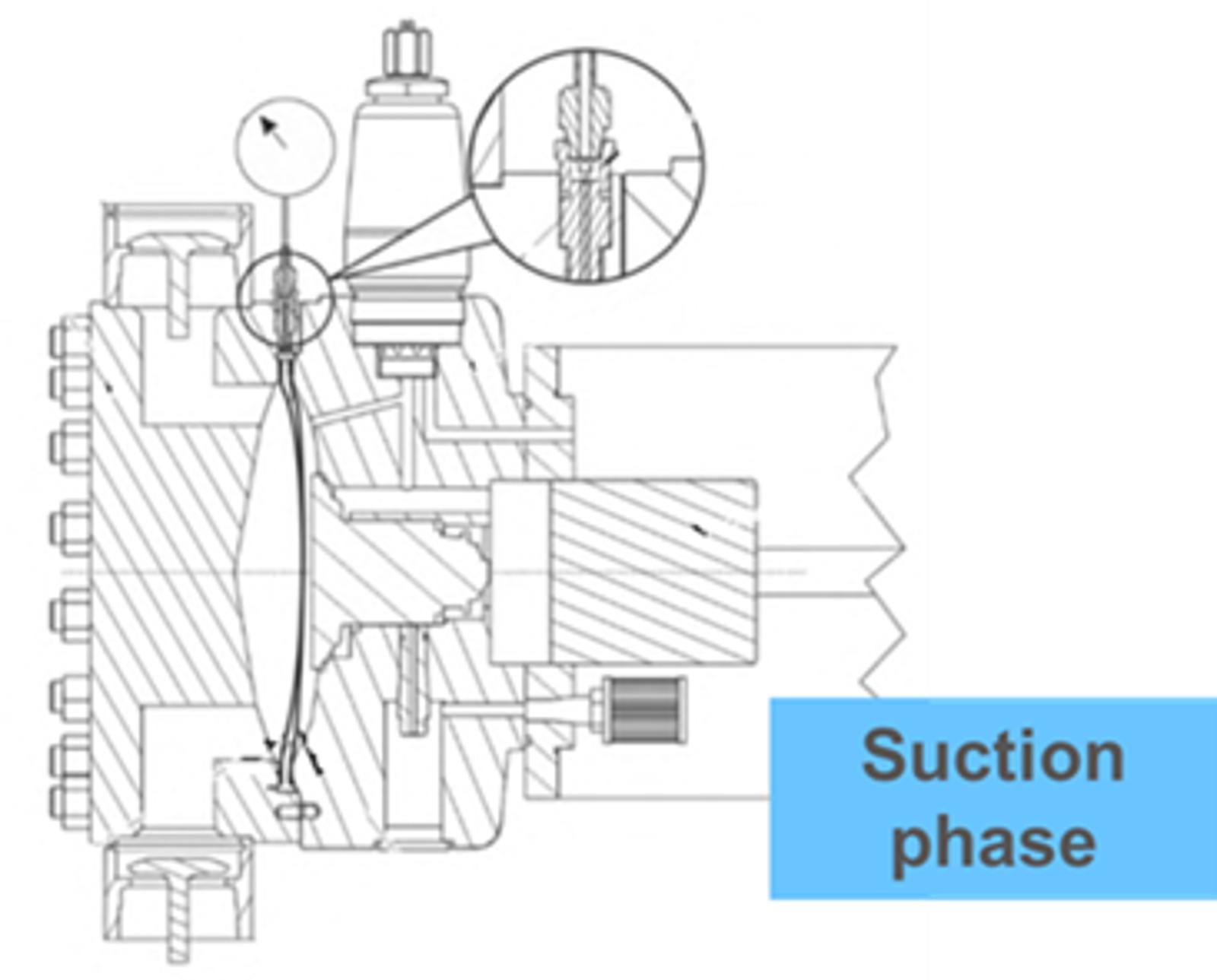
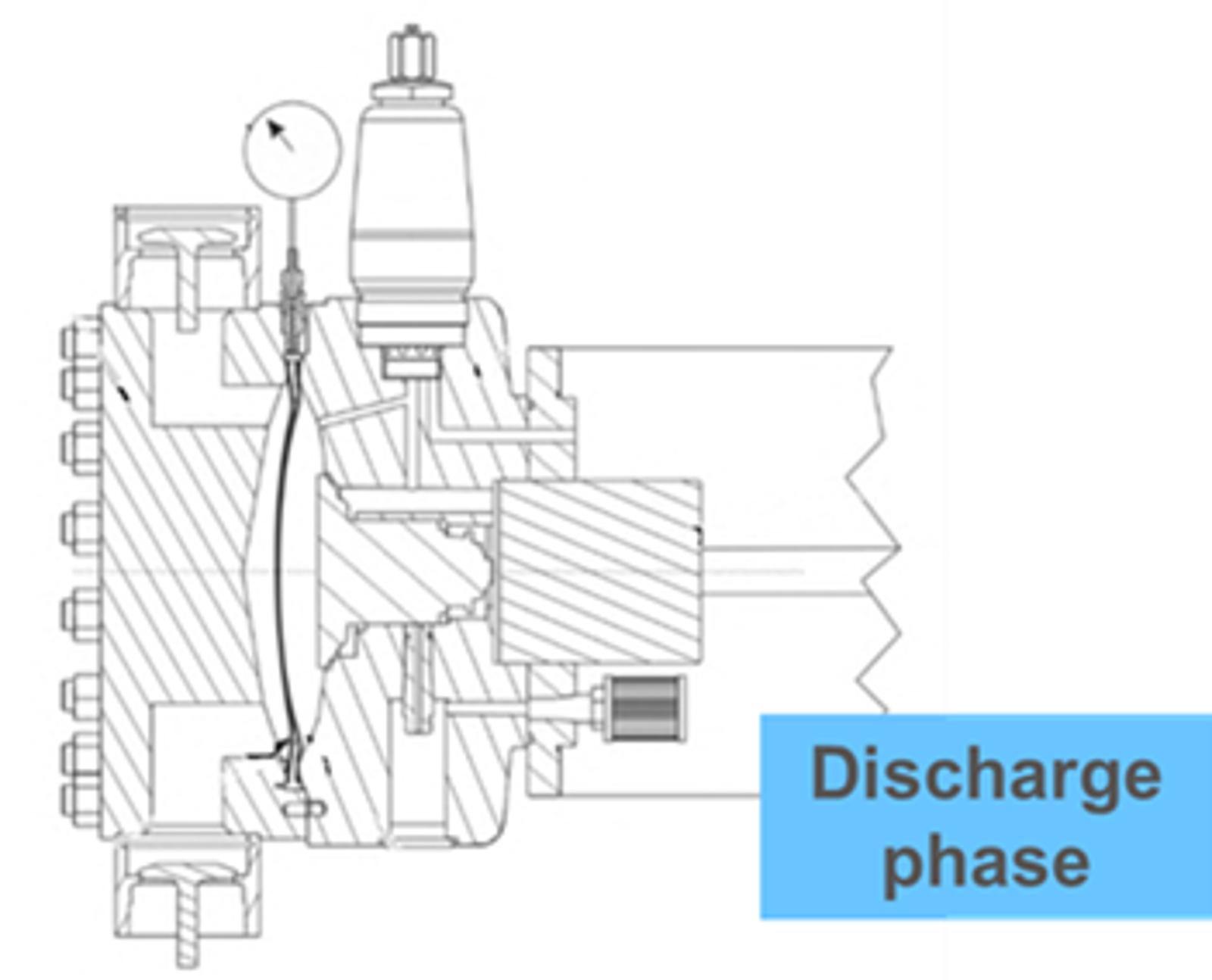
The pump displaces a fixed volume of liquid with each stroke of the piston. The piston is connected to the diaphragm, which is connected to the liquid in the pump chamber. When the piston moves down, it creates a vacuum on the upper side of the diaphragm, which sucks liquid into the pump chamber (suction phase, see Figure 2.0). The liquid is then forced out of the chamber when the piston moves up again (discharge phase, see Figure 3.0).