

Products
Metering Pumps
Process Pumps
Mixers
Systems & Skids
Electronics and Metering
Valves and Accessories
Industries & Applications
Water Treatment
Energy
Pyrolysis Plastics Recycling
Lithium Mining
Essential Pil Extraction
Palm Oil Production
Technology
Water Treatment
Energy
General Industry
Metering Pump Technology
Metering Pump Principles
Petrochemical Industry
Aftermarket & Support
CARE Maintenance Plans
Spare Parts Inventory
Resources
White Paper
Case Studies
Webinars on Demand
Digital Support Files
Certifications
Milton Roy YouTube Channel
Sales Terms & Conditions
About Us
News
Knowledge Hub
Careers
Sign Up for Newsletter

A reciprocating pump is a positive displacement pump that captures a moving fluid in a cavity and then discharges a fixed amount of it via mechanical pressure. It is a constant volume pump that operates in low flow and high discharge pressure environments.

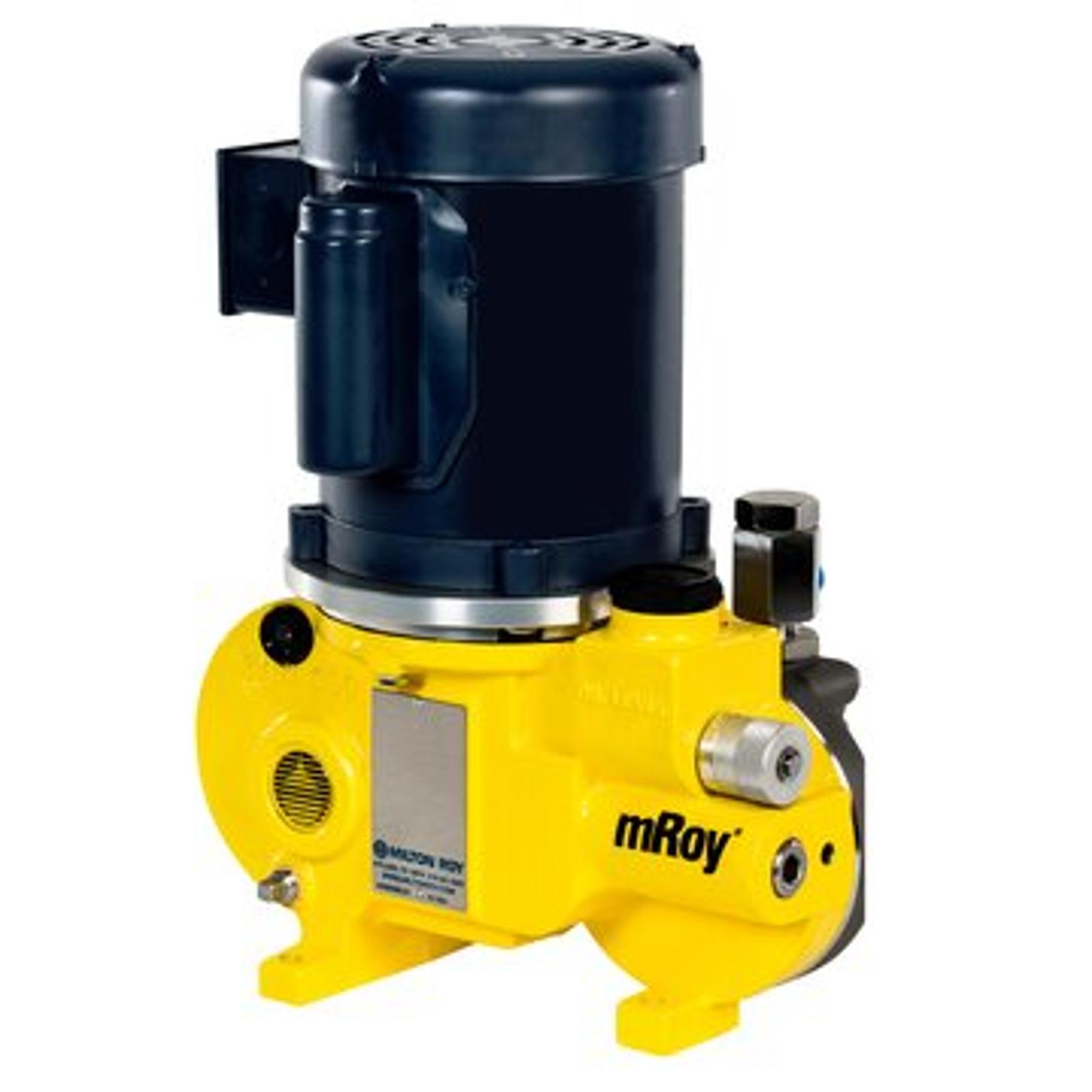
Milton Roy’s reciprocating pumps can handle flow rates from 0.024 gallons per hour (0.09 liters per hour) to 12,681 gallons per hour (48 cubic per hour) and discharge pressures up to 15,000 psi (1,034 bar).
What is a reciprocating pump?

A reciprocating pump is a positive displacement pump that captures a moving fluid in a cavity and then discharges a fixed amount of it via mechanical pressure. It is a constant volume pump that operates in low flow and high discharge pressure environments. Milton Roy’s reciprocating pumps can handle flow rates from 0.024 gallons per hour (0.09 liters per hour) to 12,681 gallons per hour (48 cubic per hour) and discharge pressures up to 15,000 psi (1,034 bar).
What are the different types of reciprocating pumps?

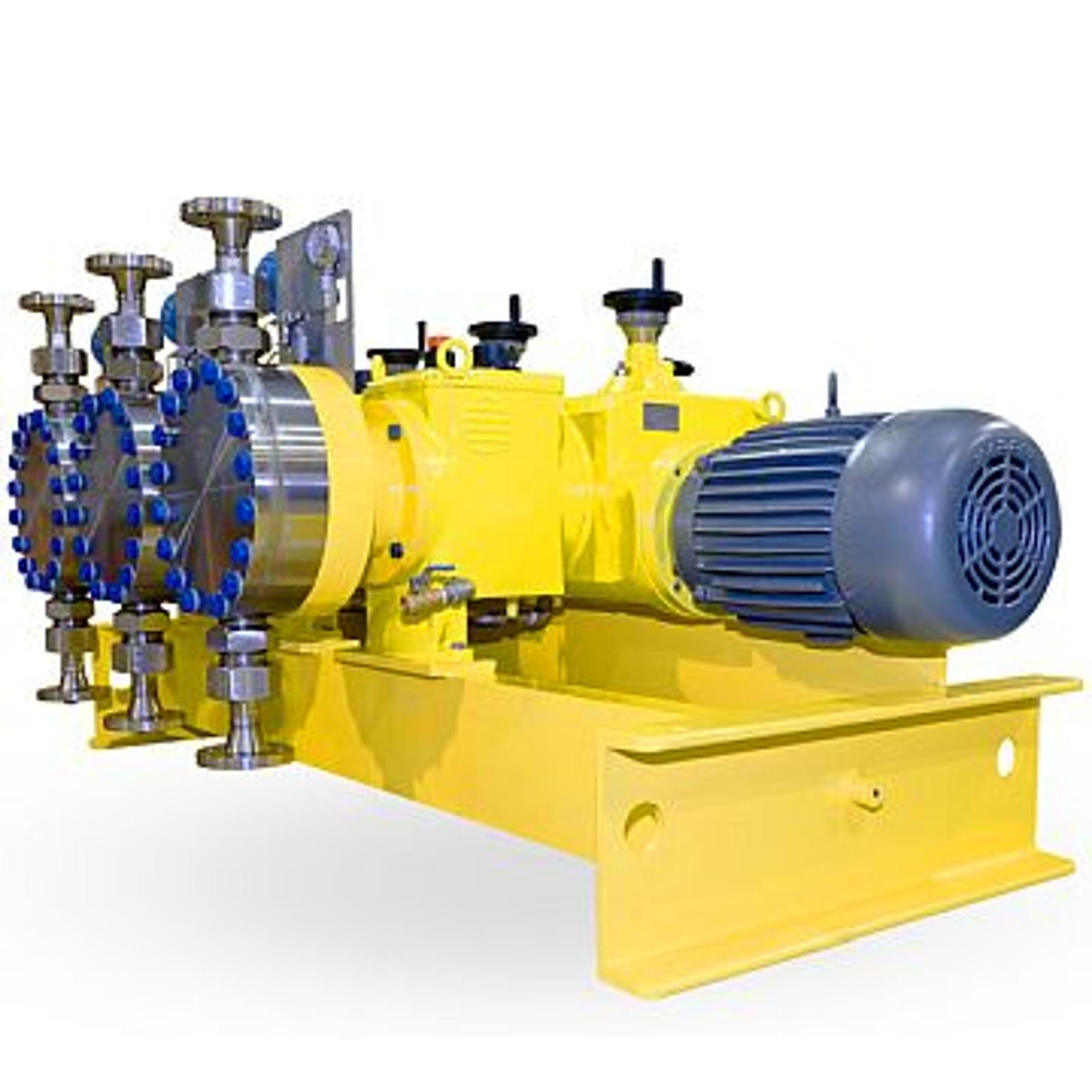
Reciprocating pumps can be Steam, Power or Metering pumps. See Figure 1.0.

Steam Pumps: Steam pumps consist of a liquid and steam cylinder joined by a spacer cradle. These pumps may be steam or air driven.

Power Pumps: Power pumps consist of a liquid end and a power end. These pumps are generally driven by electric motors, air or gasoline driven motors, or any device imparting a rotary or reciprocating motion to the pump.

Metering Pumps: Metering pumps consist of a reciprocating piston which is either in direct contact with the process fluid, or is shielded from the fluid diaphragm. Diaphragms are actuated by hydraulic fluid between the piston and the diaphragm. These pumps are driven by an AC constant speed motor. Variable speed, pneumatic and hydraulic drives are also utilized.

pump-image-cutaway

What are the major components of a reciprocating pump and how do they work?

The major components of a reciprocating pump are:
Piston, Plunger or a diaphragm
Crank and Connecting rod
Suction Pipe
Delivery pipe
Suction and Delivery valve

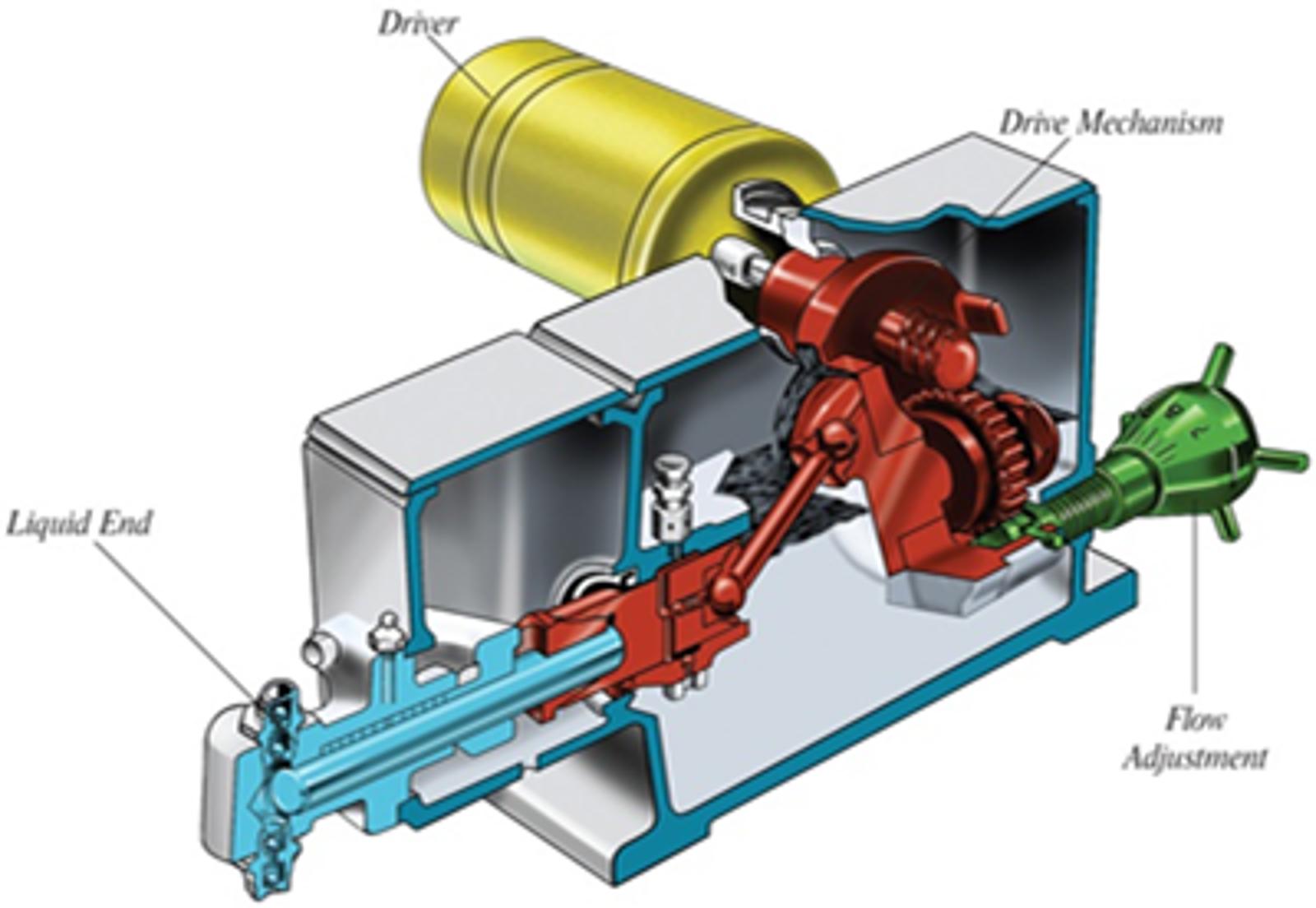
A reciprocating pump's function is to pump or move liquid from one point to another. It works on the principle of positive displacement. It uses a piston or a plunger to move the liquid back and forth in a cylinder. The piston is connected with a crankshaft with the help of a connecting rod. This piston moves as the connecting rod moves due to the motion of the crankshaft. The crankshaft connects with a motor that rotates it. The pump cylinder is connected to a suction pipe and a discharge pipe with a suction valve and a delivery valve. The inlet and outlet valves act as check valves that allow the fluid flow to flow in one direction. The fluid sucks into the cylinder through the inlet valve. The fluid exits the cylinder of the pump through the outlet valve. See Figure 2.0


What is a reciprocating pump used for? What are the primary applications?

A reciprocating pump is used where a precise amount of fluid is required to be delivered, and where the delivery pressure required is high. Some of the common applications are:

  • Chemical & Hydrocarbon Processing
  • Oil & Gas Production and Pipeline
  • Municipal Water/Waste
  • Industrial Water Treatment


What are the differences between reciprocating pumps and centrifugal pumps?

Below are some differences between reciprocating and centrifugal pumps.

Parameter

Reciprocating Pump (Milton Roy)

Centrifugal Pump

Construction

This is complicated in construction

This is simple in construction

Head or Pressure application

Reciprocating pump work at the high‑pressure head (high discharge pressure)

This works at low or medium pressure head

Pressure relief valve

Internal pressure relief valve is recommended to protect the pump

Relief valve is not required

Smooth or Pulsating flow

Pulsating flow

Smooth flow

Delivery

Constant delivery

Variable

Self‑priming

Self‑priming is possible

There is no self‑priming

Space considerations

The reciprocating pump requires more space

It requires less space

Cost

The initial cost is higher

The initial cost is low

Efficiency

High efficiency

Low efficiency

Power consumption

Power consumption is low

Power consumption is high

Maintenance

It requires maintenance

It requires lower maintenance

Fluid handling

Suitable for clean, clear and non‑abrasive fluids

Suitable for a wide range including clean, clear, particles, abrasive fluids, dirty water and oil

Are there benefits of selecting a reciprocating pump over others? If so, what are they?

There are several benefits of selecting a reciprocating pump:

  1. It can deliver the required flow rate very precisely
  2. It gives a continuous rate of discharge
  3. It can deliver fluid at very high pressure
  4. No pricing is needed


What should be considered when choosing a reciprocating pump?

Some common considerations:

  • Flow rate and pressure
  • Temperature
  • Viscosity
  • Composition of the fluid being pumped


Milton Roy Solutions

Milton Roy has over 85 years of experience in reciprocating metering pumps and equipment that delivers reliability and accuracy in critical chemical dosing applications. We manufacture different types of chemical metering pumps for your application needs.