From Hydrocarbon Feedstock to Finished Pellet — Where Precision Pumping Matters Most
Polymer production within plastic manufacturing typically begins with hydrocarbon feedstocks derived from crude oil refining. Ethane and propane are cracked to produce ethylene and propylene, which are then polymerized using catalysts to form polymer fluff — the raw intermediate that will become commercial plastic resin.
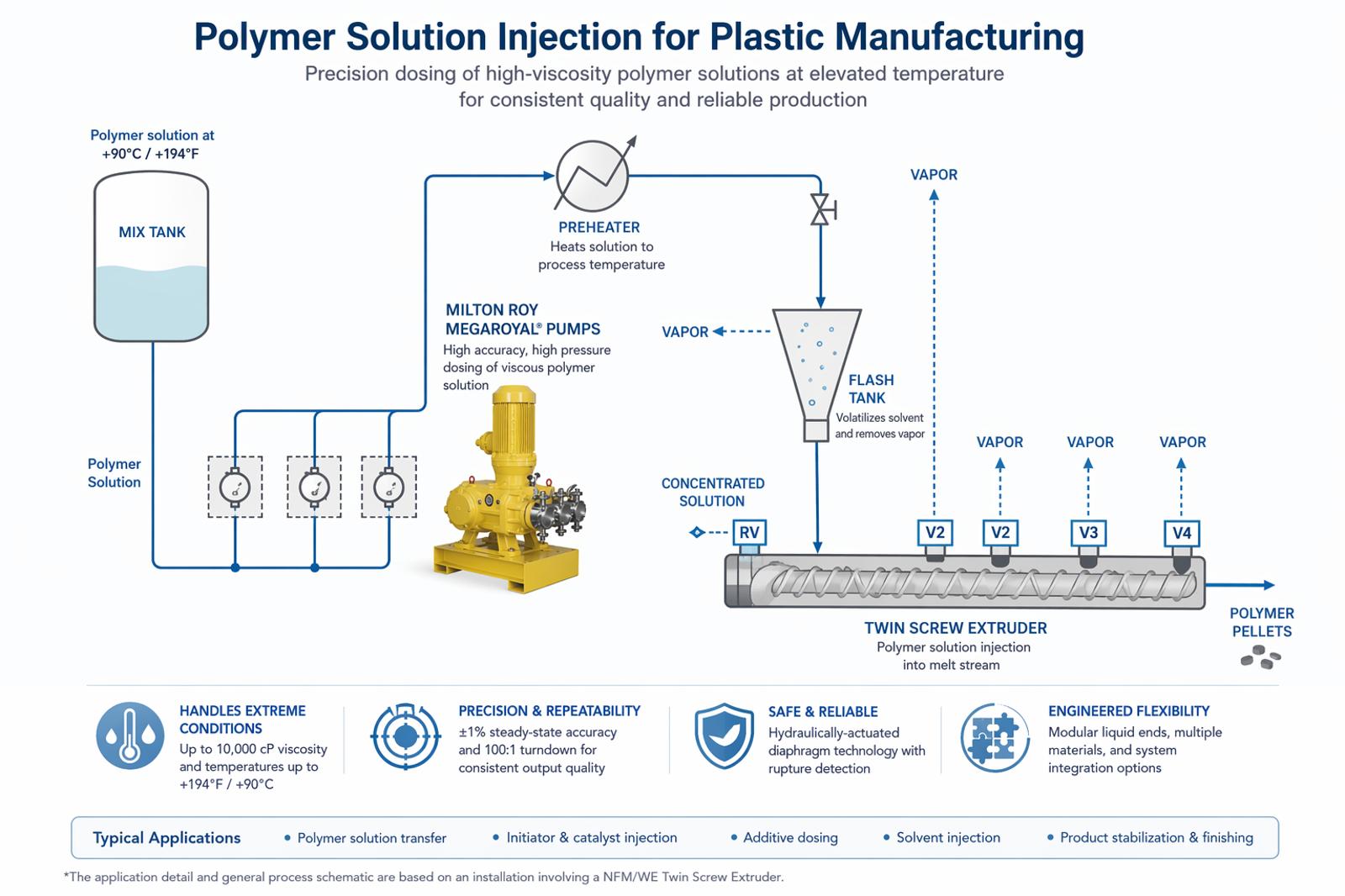
This intermediate product is blended with additives and solvents before being heated and transferred as a viscous polymer solution toward the extrusion stage. At this crucial point, the polymer solution must be injected into a flash tank or directly into a twin-screw extruder at a tightly controlled flow rate. Temperatures are often maintained near 90°C to stabilize viscosity, and flow rate changes must align precisely with extruder speed.
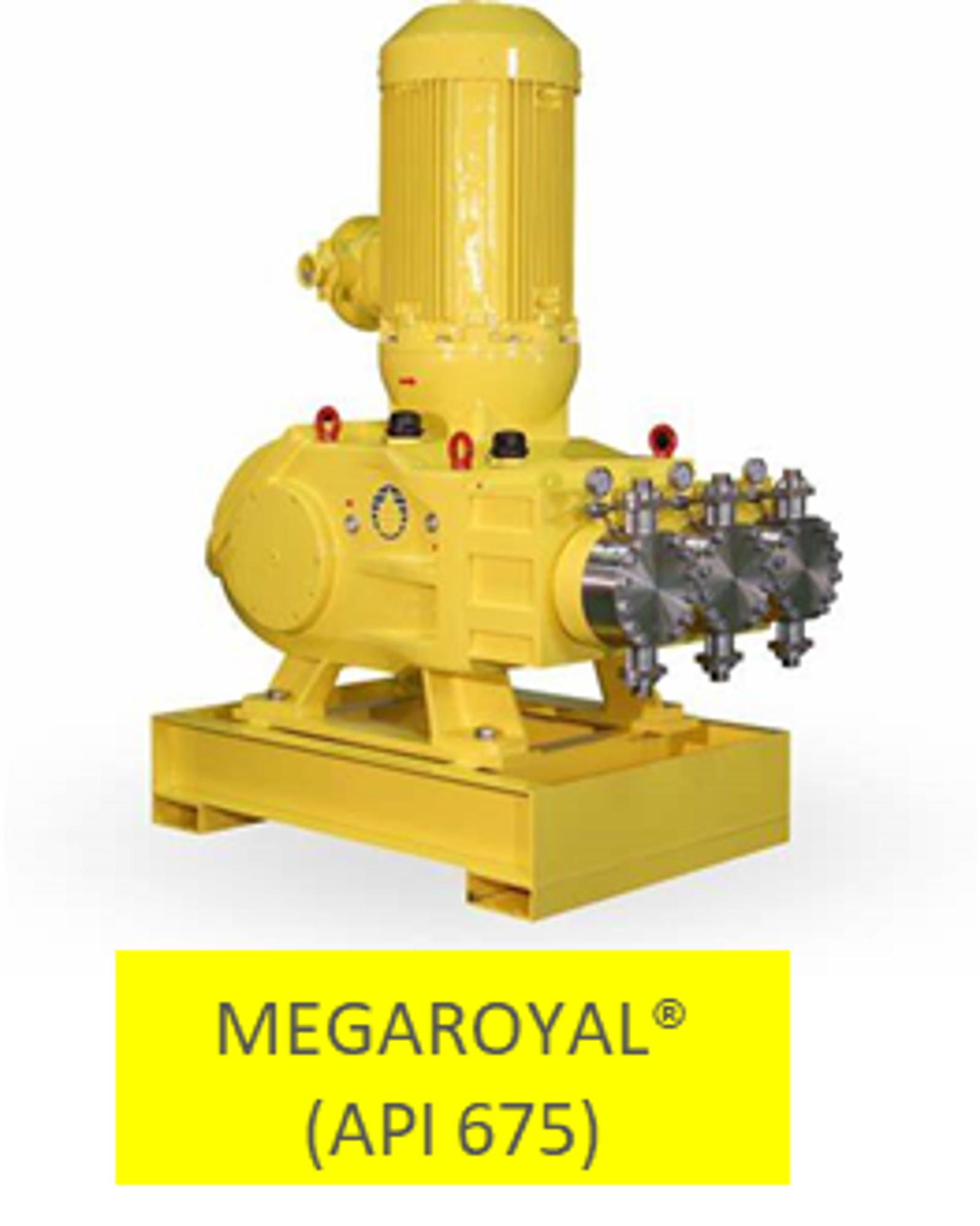
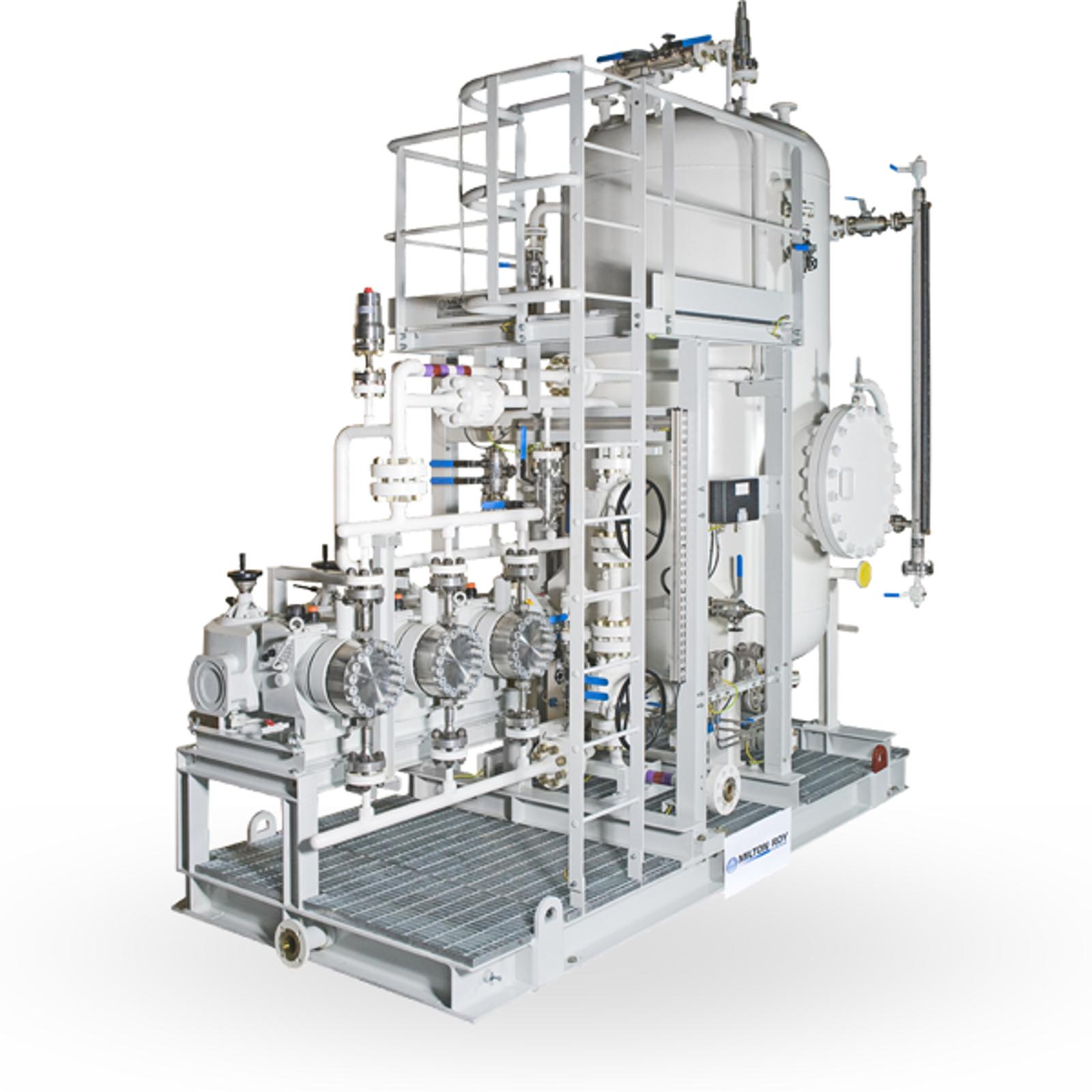
Milton Roy polymer solution pumps are positioned at this injection stage — where precision and mechanical reliability have the greatest impact on product quality and production stability. Getting the flow right here means uniform pellet formation, minimal scrap, and protected downstream equipment.