
Products
Metering Pumps
Process Pumps
Mixers
Systems & Skids
Electronics and Metering
Valves and Accessories
Industries & Applications
Water Treatment
Energy
Mining & Mineral Processing
Chemical Industry
General industry
Technology
Metering Pump Technology
Metering Pump Principles
Aftermarket & Support
CARE Maintenance Plans
Spare Parts Inventory
Resources
White Paper
Case Studies
Webinars on Demand
Digital Support Files
Certifications
Milton Roy YouTube Channel
Sales Terms & Conditions
About Us
News
Knowledge Hub
Careers
Sign Up for Newsletter

Restored, reliable water quality is a first-order operational objective after any disaster, and a permanent requirement in humanitarian and displacement contexts. Treatment chemistry is what separates a functioning response from a public health emergency — cholera, typhoid, hepatitis A, and shigellosis outbreak risk rises within days of a chlorination lapse. The engineering brief is unusually broad: dose accurately under field conditions, tolerate ambient temperature swings from below freezing to 50 °C, operate on grid, generator, solar, battery, or gravity power, and maintain a residual through storage and distribution to point of use.

The chemistry of emergency water treatment is not fundamentally different from municipal practice — the same disinfectants, the same coagulation logic, the same pH management. What differs is the operating environment. A dosing pump that works reliably in a Central European water utility control room may not survive six months in a coastal refugee camp; a chemistry program designed for consistent municipal source water will need substantial adaptation for a hurricane-damaged aquifer with elevated turbidity, iron, and hydrocarbon contamination.

Rapid Chlorination for Restored Municipal Distribution

When a municipal water system comes back online after infrastructure damage, contamination event, or intentional disruption, residual disinfection at the source is the fastest tool for re-establishment. Sodium hypochlorite dosing at reservoirs, wellheads, and intermediate boosting stations restores a distribution residual within hours; trailer-mounted or containerized dosing skids are commonly pre-staged by utilities, civil protection agencies, and mutual-aid networks. Post-Sandy in the U.S. Northeast, post-Harvey in the Gulf, and after major European flood events, pre-staged dosing capacity has been a decisive factor in restoration timelines.
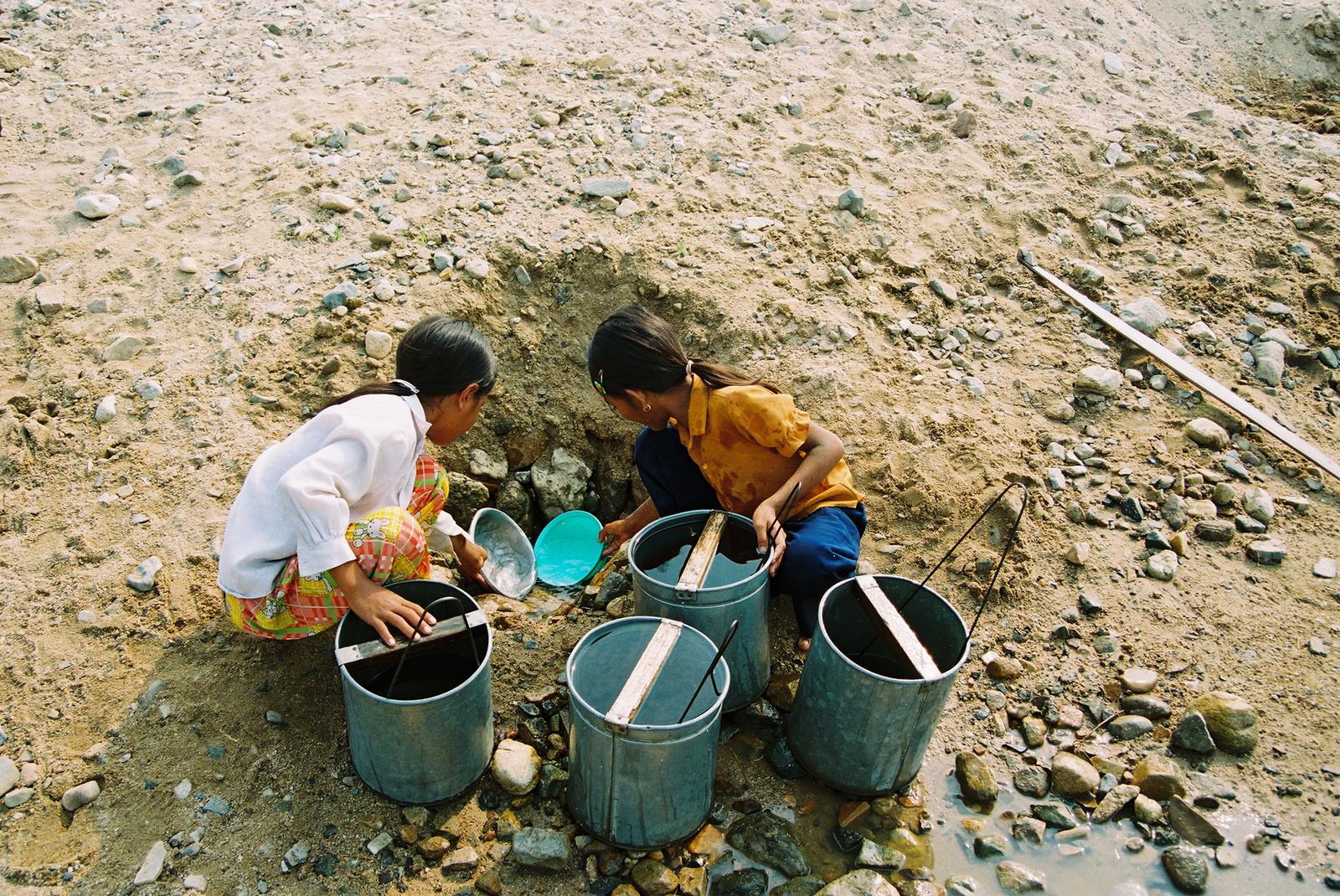
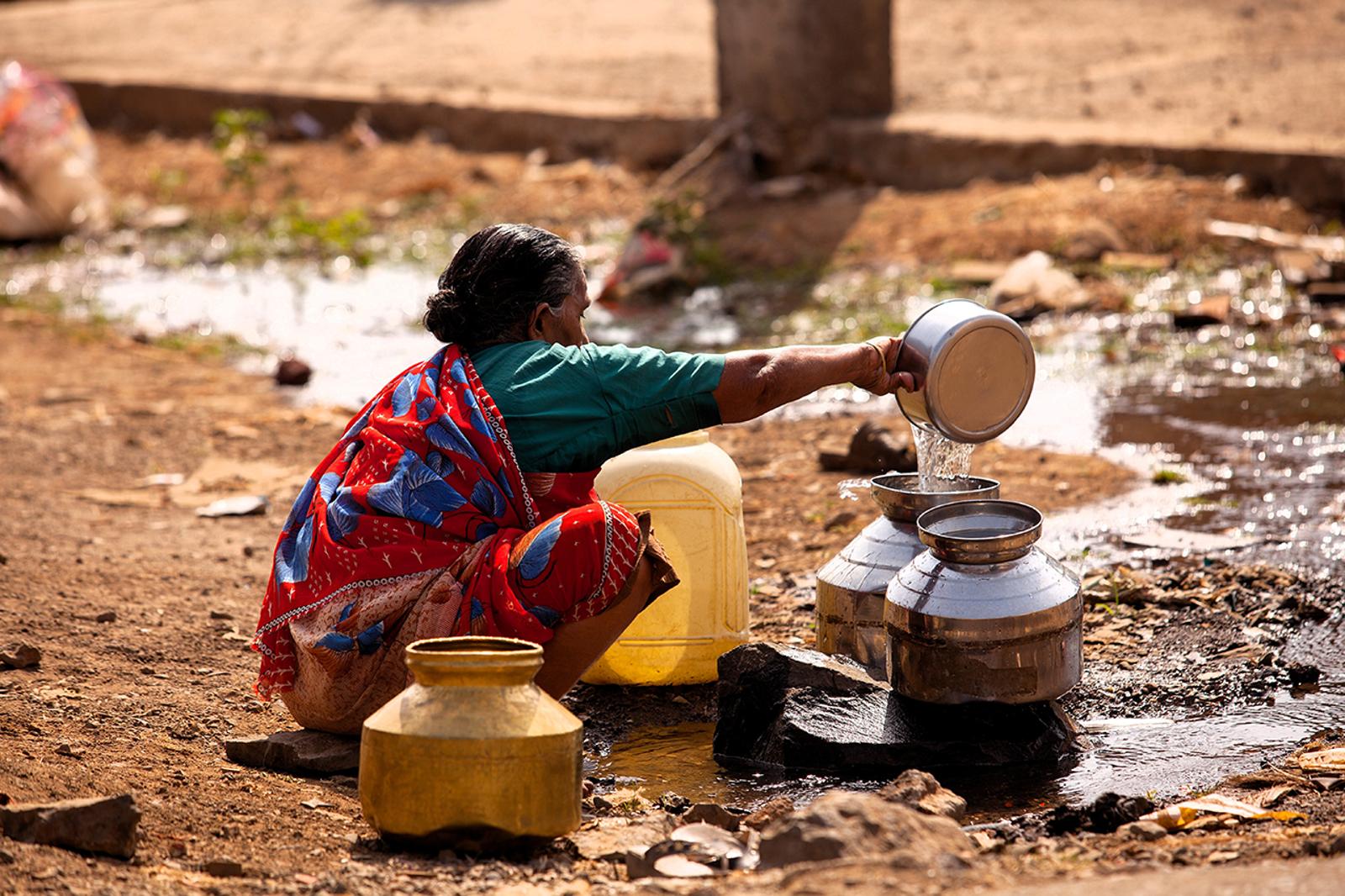
Free chlorine targets are typically set at 0.5 to 1.0 mg/L at the source to achieve the WHO benchmark residual of 0.2 to 0.5 mg/L at point of use, with higher residuals recommended during active outbreaks or elevated contamination risk. Contact time — the CT product of chlorine concentration and residence time — matters as much as instantaneous dose, and calculations must reflect the expected water quality (turbidity, organics, ammonia) that the disinfectant is working against.

Mobile Water Treatment Units

Mobile water treatment units are deployed by military engineers, humanitarian NGOs (ICRC, MSF, national Red Cross societies, UNICEF partners), specialized disaster response contractors, and — increasingly — utilities themselves as mobile backup assets.

Common process trains combine raw water intake (floating strainer or bank-side pump), chemical coagulation (alum or PAC, dosed on rapid jar-testing), flocculation (mechanical or hydraulic), sedimentation or dissolved air flotation, multi-media filtration (sand, anthracite, sometimes GAC), and membrane polishing where the source water demands it. Ultrafiltration is now standard on higher-spec MWTUs; reverse osmosis where source salinity makes it necessary. Disinfection is typically chlorine (sodium hypochlorite from bulk supply or on-site electrolysis of brine), sometimes UV backed by residual chlorination for pathogen redundancy, or chlorine dioxide where the source water carries higher levels of chlorine-tolerant pathogens.

Well-Head and Distributed-Source Disinfection

Refugee camps, rural resettlement sites, and small utilities in low-infrastructure contexts routinely depend on borehole or spring water sources. Continuous chlorination at the source with pumps designed for solar, gravity feed, or battery operation is a standard humanitarian practice endorsed by the WHO Guidelines for Drinking-water Quality and the Sphere Handbook, and widely deployed by UNICEF WASH programs and national civil protection agencies.

The design constraints on well-head disinfection in humanitarian contexts are demanding. Zero grid dependence is often required. Simple maintenance by trained field staff — not water treatment engineers — must be practical. Long service intervals with locally sourceable spares matter for sustainability. Compatibility with locally available sodium hypochlorite, which varies substantially in concentration and often arrives partially deteriorated from heat and time, drives equipment selection. And the dose must be proportional to source flow, because hand-pump or gravity flow varies through the day as populations use the water source.

Safe Drinking Water Beyond the Plant Gate

Municipal treatment plants aren't the only places where water quality matters. Remote communities, disaster relief operations, and rural facilities face the same challenge — delivering safe, compliant drinking water with fewer resources and no guaranteed power supply. Dosatron's non-electric, water-powered dosing pumps bring precision chlorination and chemical treatment to the environments where simplicity and reliability aren't optional, they're the only option.

Point-of-Distribution and Point-of-Use Chlorination

Where centralized dosing is not feasible, chlorine is added at tap stands, storage tanks, or household level. Bulk chlorination of tanker trucks, drum-scale hypochlorite dosing at tap stands, and pre-measured tablet or sachet systems at household level cover the range. The target residual at point of use is 0.2 to 0.5 mg/L free chlorine per WHO GDWQ, with higher targets during outbreak conditions.

Sodium Hypochlorite

Sodium hypochlorite is the most common disinfectant in emergency and humanitarian contexts — typically 6 to 15% commercial strength, or generated on-site by electrolysis of brine. It degrades with heat and light, and supply chain quality control is a real field issue rather than a specification detail.

Calcium Hypochlorite

Calcium hypochlorite (HTH) in solid form (65 to 70% available chlorine) is preferred in logistics-constrained operations because it has a longer shelf life, ships as a solid, and is dosed as a dissolved solution.

Chlorine Dioxide

Chlorine dioxide is effective across a wider pH range, effective against Giardia and Cryptosporidium (which are chlorine-tolerant), and does not form trihalomethanes — but requires on-site generation from sodium chlorite plus acid or hypochlorite, which restricts its use to operations with the technical capacity to run the generator safely.

Household-Level Products

Household-level products — sodium hypochlorite drops, NaDCC tablets, and PUR-type flocculant/disinfectant sachets — cover point-of-use where centralized infrastructure is absent.

Standards Backdrop

The WHO Guidelines for Drinking-water Quality (5th edition, with regular addenda) is the global reference standard, including in emergencies. The Sphere Handbook — Humanitarian Charter and Minimum Standards for WASH — is the operational reference for humanitarian responses. U.S. EPA Emergency Disinfection Guidance covers domestic disaster response. Regional civil protection standards generally reference WHO or national utility guidelines with local adaptation.