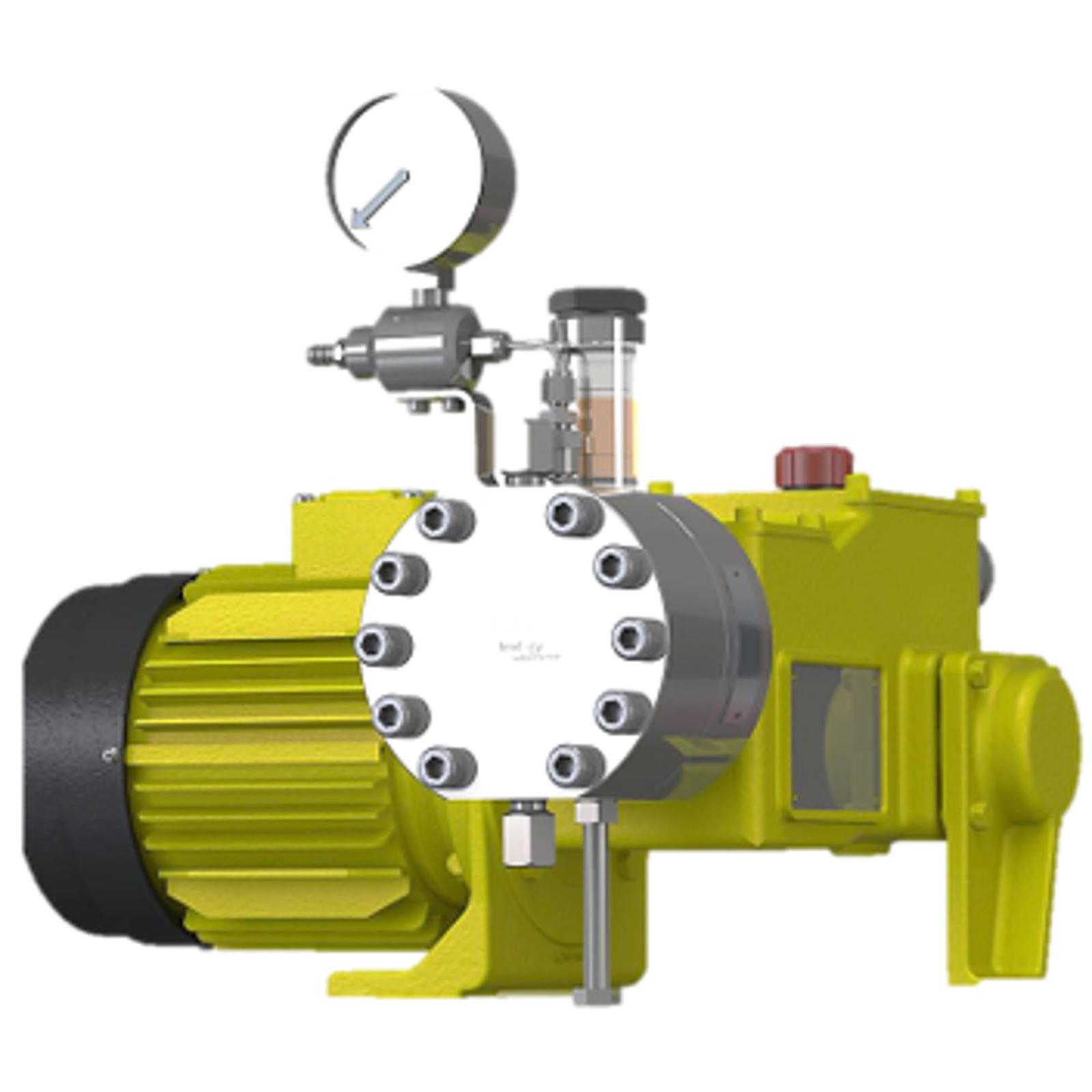
Milton Roy pumps in Critical TEAL Applications
Triethylaluminum — universally known as TEAL in the petrochemical industry (Al(C₂H₅)₃, CAS 97-93-8) — is one of the most critical and hazardous chemicals in modern polymer manufacturing. As the primary cocatalyst in Ziegler-Natta polymerization, TEAL activates transition metal catalysts to initiate and control the polymerization of olefins into the polyolefins that underpin modern life: polyethylene (PE), polypropylene (PP), and their countless variants.
But TEAL is also one of the most dangerous chemicals a plant will ever handle. It is pyrophoric — igniting spontaneously on contact with air — and reacts violently with water. Its dosing demands absolute precision, total containment, and zero tolerance for leaks. This is exactly the environment Milton Roy metering pumps were designed for.
With ±1% steady-state accuracy, API 675 compliance, multiple diaphragm technologies including our patented DSD (Dynamic Stiffness Diaphragm), and decades of proven service in the world's most demanding polyolefin plants, Milton Roy is the trusted choice for TEAL metering — from pilot reactors to world-scale production facilities.
What Is TEAL and Why Does It Matter?
Triethylaluminum (TEAL) is an organoaluminum compound — a colorless liquid that is soluble in aromatic and saturated hydrocarbons, with a density of 0.832 g/cm³ and a boiling point of 186°C. It belongs to the family of metal alkyls and is characterized by extremely high reactivity: TEAL is a strong Lewis acid, a powerful alkylating agent, and a potent reducing agent.
Its most important industrial role is as a cocatalyst in the Ziegler-Natta catalytic system — the backbone of global polyolefin production. In this system, TEAL activates titanium-based catalysts (typically TiCl₃ or TiCl₄ on MgCl₂ supports) by alkylating the transition metal center and scavenging trace impurities (water, oxygen) that would otherwise poison the catalyst. The Al/Ti molar ratio directly influences polymerization rate, molecular weight distribution, and the microstructure of the resulting polymer — making precise TEAL dosing a critical process control parameter.
Key physical and chemical properties:
- Chemical formula: Al₂(C₂H₅)₆ (exists as dimer in liquid state)
- CAS number: 97-93-8
- Molecular weight: 114.2 g/mol (monomer)
- Flash point: −18°C (0°F) — extremely low
- Pyrophoric: Ignites spontaneously on contact with air
- Water-reactive: Reacts violently, may ignite — producing ethane gas and aluminum hydroxide
- Thermal decomposition: Above 120°C, producing hydrogen, ethylene, and elemental aluminum
- Viscosity: 2.5 mPa·s at 25°C
Critical TEAL Applications in the Petrochemical Industry
The primary application of TEAL is as a cocatalyst in the Ziegler-Natta polymerization of olefins. This catalytic system produces the vast majority of the world's polyolefins — materials that are used in packaging, automotive components, construction, textiles, medical devices, and thousands of other applications.
TEAL is essential in the production of:
- High-Density Polyethylene (HDPE) — Pipes, containers, bottles, industrial film
- Low-Density Polyethylene (LDPE) — Packaging film, carrier bags, wire insulation
- Linear Low-Density Polyethylene (LLDPE) — Stretch film, flexible packaging, liners
- Polypropylene (PP) — Automotive parts, appliances, fiber, medical packaging
- Ethylene-Propylene copolymers and terpolymers (EPR, EPDM)
In these processes, TEAL dosing accuracy directly impacts polymer quality. Too little TEAL results in insufficient catalyst activation and low yields. Too much causes over-reduction of active titanium species (from Ti³⁺ to inactive Ti²⁺), excessive chain transfer leading to lower molecular weights, and wasted reagent. The optimal Al/Ti molar ratio must be maintained within tight tolerances — typically between 50:1 and 400:1 depending on the catalyst system — making ±1% metering accuracy a genuine process requirement, not a marketing claim.
Why TEAL Demands Zero-Leak Metering Technology
TEAL is classified among the most hazardous chemicals handled in petrochemical operations. Its extreme reactivity creates a unique set of engineering challenges that conventional pumping technology simply cannot address:
- Pyrophoric: TEAL ignites spontaneously on contact with air or atmospheric moisture — even in solution. Any leak, however small, creates an immediate fire risk.
- Water-reactive: Contact with water produces a violent exothermic reaction, generating flammable ethane gas and potentially causing explosions. All process equipment must be scrupulously dried and purged with inert gas (N₂ or Ar) before service.
- Thermally unstable: Above 120°C, TEAL decomposes into hydrogen, ethylene, and elemental aluminum — creating both flammability and fouling risks.
- Corrosive to skin and eyes: TEAL causes severe chemical burns on contact, requiring full PPE protocols.
- Process-critical accuracy: Because the Al/Ti ratio directly controls polymer properties, even small dosing errors can produce off-spec product, wasted catalyst, and lost production.
These properties mean that the metering pump is not just a piece of equipment — it is a critical safety barrier. The pump must guarantee absolute containment (zero external leakage), inert-atmosphere compatibility (nitrogen blanketing and purging), and precise, repeatable dosing under all operating conditions.
Engineering Requirements for TEAL Metering Pumps
- Dosing accuracy: ±1% steady-state over a 10:1 turndown range (10% to 100% of nominal flow)
- Operating pressure: Up to 1,000 PSI (70 bar) for typical reactor injection — with capability to 3,495 PSI (241 bar) for high-pressure applications
- Flow rates: Typically sub-60 LPH for catalyst dosing — but pump must maintain accuracy at very low stroke rates
- API 675 compliance: Mandatory for polymerization reactor service — covers design, testing, and performance standards
- ATEX / IECEx certification: Required for installation in classified hazardous areas (Zone 1 / Zone 2)
Milton Roy Metering Pumps for TEAL Service
Milton Roy has supplied metering pumps for TEAL and other pyrophoric chemical applications to polyolefin producers worldwide for decades. Our pumps are engineered from the ground up for this exact service — combining hydraulically actuated diaphragm technology, multiple diaphragm options, integrated leak detection, and nitrogen purge capability in a modular, API 675-compliant platform.
Two pump platforms are recommended for TEAL applications, depending on the specific process requirements:
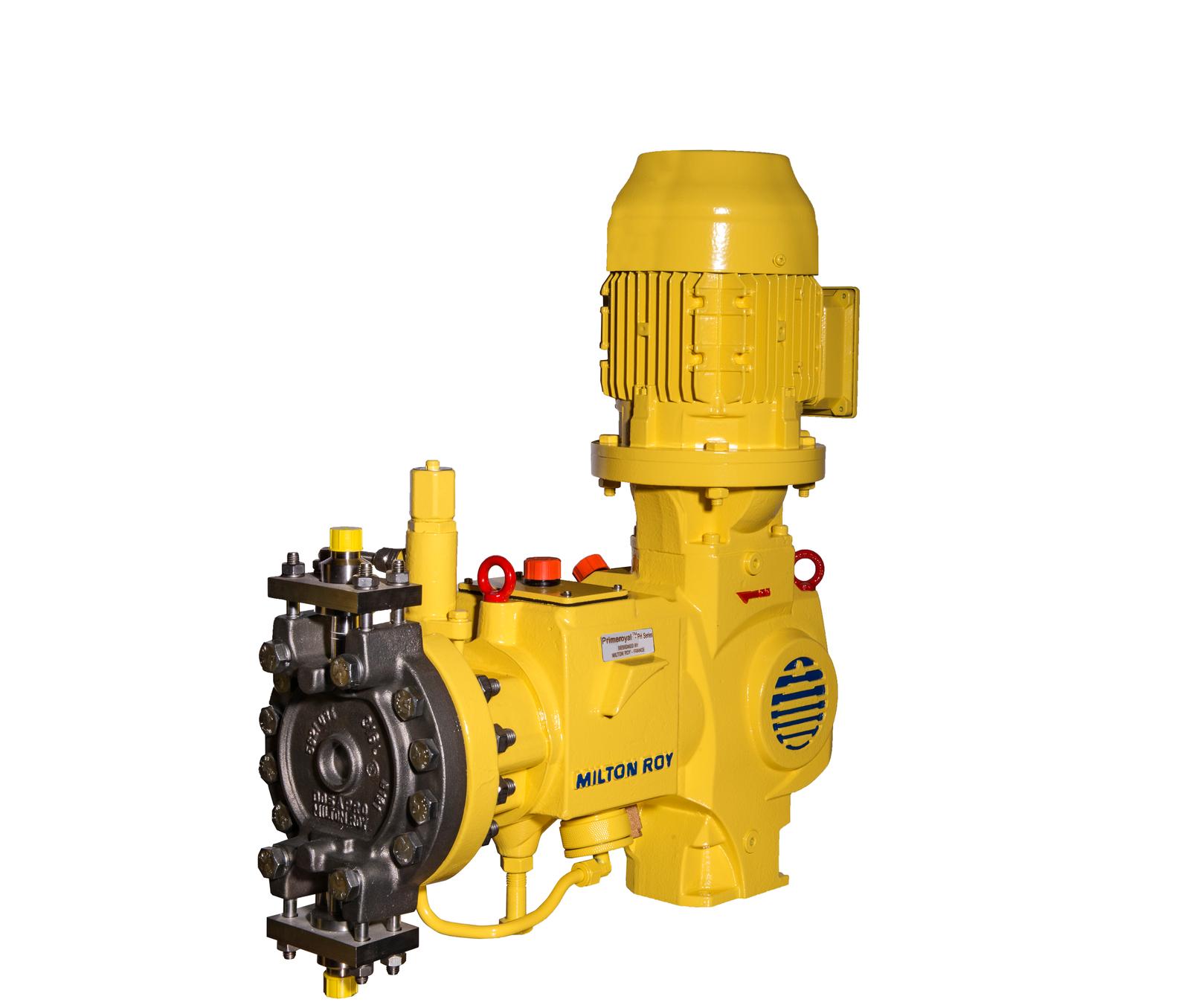
PRIMEROYAL Series