Products
Metering Pumps
Process Pumps
Mixers
Systems & Skids
Electronics and Metering
Valves and Accessories
Industries & Applications
Water Treatment
Energy
Mining & Mineral Processing
Chemical Industry
General industry
Technology
Metering Pump Technology
Metering Pump Principles
Aftermarket & Support
CARE Maintenance Plans
Spare Parts Inventory
Resources
White Paper
Case Studies
Webinars on Demand
Digital Support Files
Certifications
Milton Roy YouTube Channel
Sales Terms & Conditions
About Us
News
Knowledge Hub
Careers
Sign Up for Newsletter

Coagulation is the single most critical chemical process in water treatment. Get the dose wrong, and everything downstream suffers — higher turbidity, increased filter loading, elevated disinfection by-product formation, and regulatory non-compliance. Get it right, and you unlock measurable savings in chemical consumption, operator time, and effluent quality.

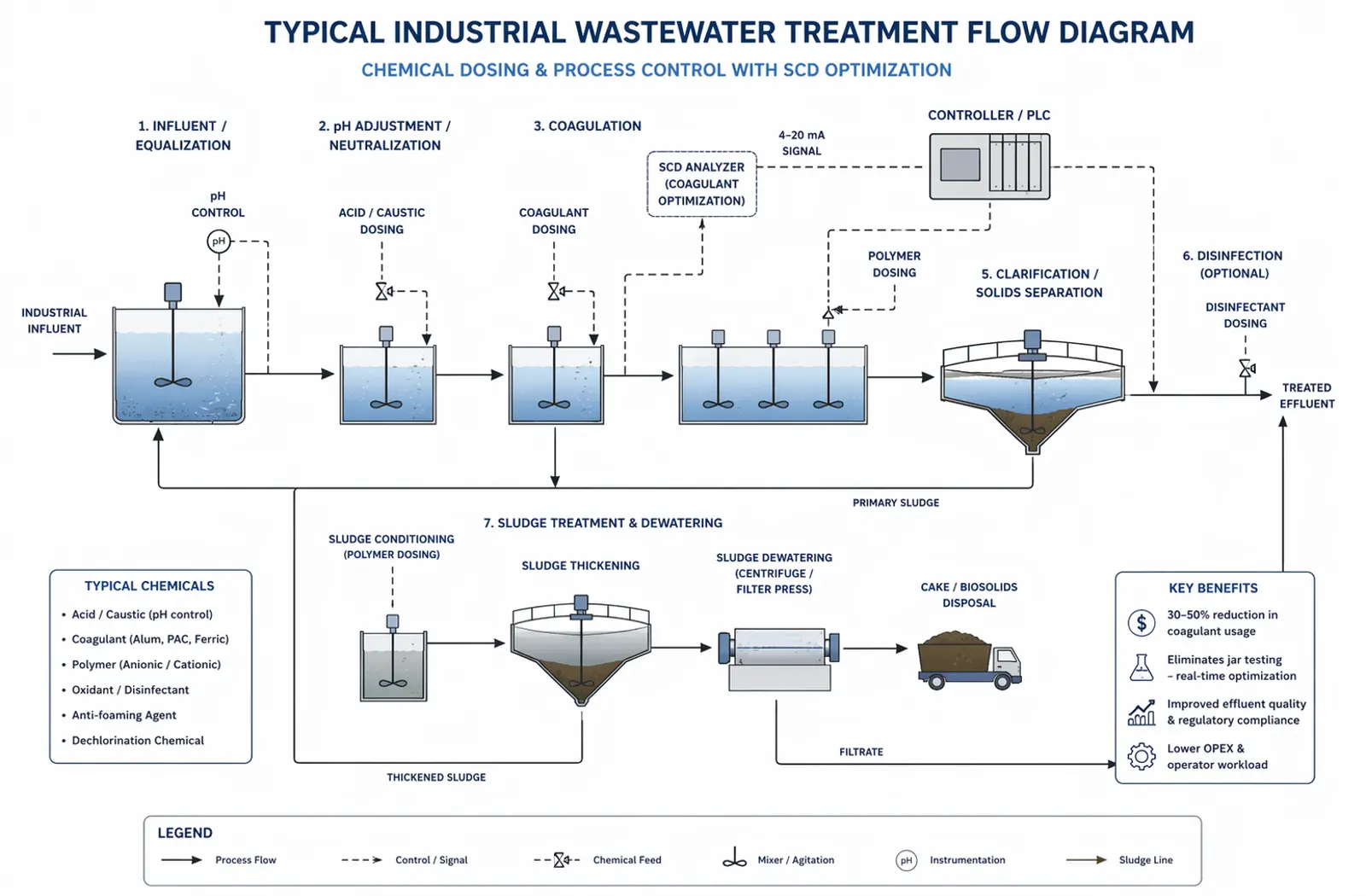
Milton Roy Streaming Current Detectors (SCDs) eliminate the guesswork. By continuously measuring the net electrical charge of particles in a water sample, the SCD provides a real-time signal that directly controls coagulant feed rate — automatically adjusting to changes in raw water quality before they impact treated water.

The result? Operators at one surface water treatment plant eliminated jar testing entirely, reduced alum costs by 50%, lime costs by 50%, and completely eliminated polymer use for color removal — paying back the full cost of the SCD in less than 12 months.

What Is a Streaming Current Detector?

Streaming Current is the electrical signal generated by charged ions moving in a high-velocity fluid stream. A Streaming Current Detector captures, amplifies, and processes this signal to provide continuous, real-time measurement of the net charge density of particles suspended in a water or wastewater sample.

Unlike jar testing — which provides a snapshot of conditions at a single point in time and requires significant operator labor — an SCD provides continuous, automated process control that responds instantly to changes in raw water chemistry, turbidity, color, temperature, and flow.

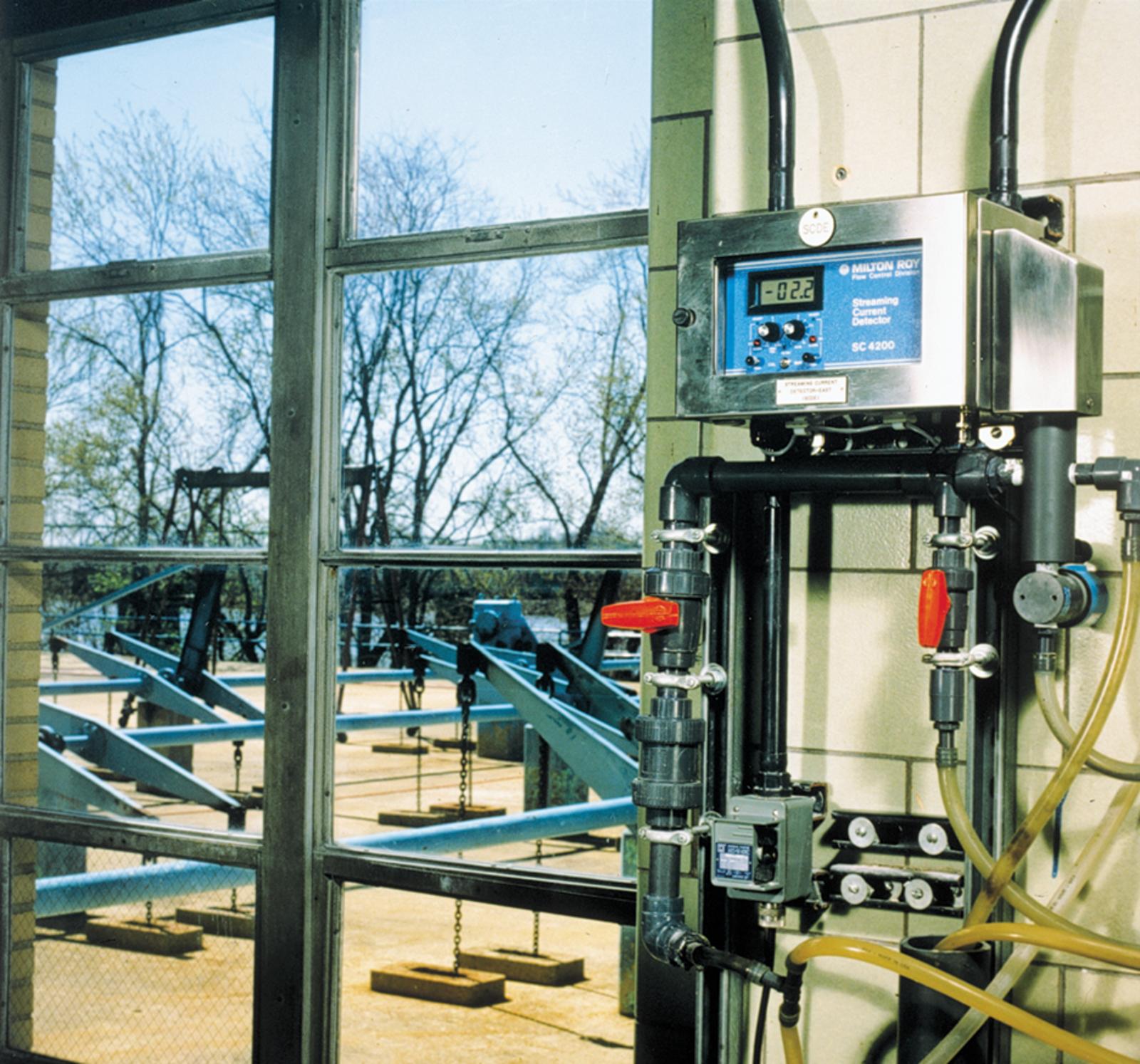
SCD Surface Water Treatment

How Does an SCD Work?

  • A water sample is continuously drawn through the SCD sensing chamber.
  • Inside the chamber, a precision reciprocating plunger creates a high-velocity fluid stream between the plunger and cylinder wall.
  • Charged particles (colloids, organics, suspended solids) adhere to the plunger and cylinder surfaces.
  • Electrodes within the chamber detect the electrical current generated by ionic charge transport in the moving fluid.
  • The charge signal — measured in nanoamps (10⁻⁹ A) — is amplified, filtered, and converted to a standard 4–20 mA analog output.
  • This output signal directly controls the speed of a metering pump (or other dosing device), automatically adjusting chemical feed rate to maintain optimal coagulation conditions.
Water Treatment Plant

Why Streaming Current Detection Matters

The majority of water and wastewater treatment plants still rely on jar testing to determine coagulant dose rates. Jar tests are slow (30–60 minutes per test), labor-intensive, and represent conditions at a single moment — not the continuous, real-time reality of a dynamic treatment process. During storm events, seasonal turnover, or industrial discharge spikes, raw water quality can change faster than jar tests can keep up — leading to overdosing, underdosing, and effluent exceedances.

Key Applications

Surface water sources are subject to rapid turbidity and color fluctuations caused by rainfall, snowmelt, algae blooms, and seasonal turnover. The SCD continuously monitors the charge of incoming particles and adjusts coagulant (alum, ferric chloride, PAC) dosing in real time. Some jurisdictions — including certain U.S. states — now recommend or require SCDs for automated coagulant control in surface water treatment plants.

SCD continuously monitors the charge of incoming particles and adjusts coagulant

Proven Results: Real-World Performance


Before SCD

After SCD

Jar Tests Required

2+ per day

Eliminated

Effluent Turbidity

0.7–1.2 NTU (variable)

< 0.7 NTU (stable)

Effluent Color

5–10 PtCo (spikes during storms)

< 1 PtCo (consistent)

Alum Cost

Over budget regularly

Reduced by 50%

Polymer Use (color)

Regular consumption

Completely eliminated

ROI: The SCD paid for itself in less than 12 months through chemical savings alone — before accounting for reduced operator labor, improved effluent quality, and avoided

Stop Guessing. Start Saving

Milton Roy's Streaming Current Detector delivers real-time, closed-loop coagulant control — cutting chemical costs by 30–50% and eliminating jar testing entirely. One 4–20 mA signal. Fully automated. Proven across surface water, groundwater, municipal and industrial applications.