

Products
Metering Pumps
Process Pumps
Mixers
Systems & Skids
Electronics and Metering
Valves and Accessories
Industries & Applications
Water Treatment
Energy
Pyrolysis Plastics Recycling
Lithium Mining
Essential Pil Extraction
Palm Oil Production
Technology
Water Treatment
Energy
General Industry
Metering Pump Technology
Metering Pump Principles
Petrochemical Industry
Aftermarket & Support
CARE Maintenance Plans
Spare Parts Inventory
Resources
White Paper
Case Studies
Webinars on Demand
Digital Support Files
Certifications
Milton Roy YouTube Channel
Sales Terms & Conditions
About Us
News
Knowledge Hub
Careers
Sign Up for Newsletter

Mechanically actuated diaphragm pumps (MAD) represent one of the most established architectures in positive displacement metering.

Their design is based on direct mechanical transmission, ensuring a precise and deterministic relationship between drive motion and volumetric output. This fundamental simplicity has led to widespread adoption across industry, where MAD pumps are valued for their predictability, reliability, and ease of operation.

Mechanical Architecture and Operating Principle

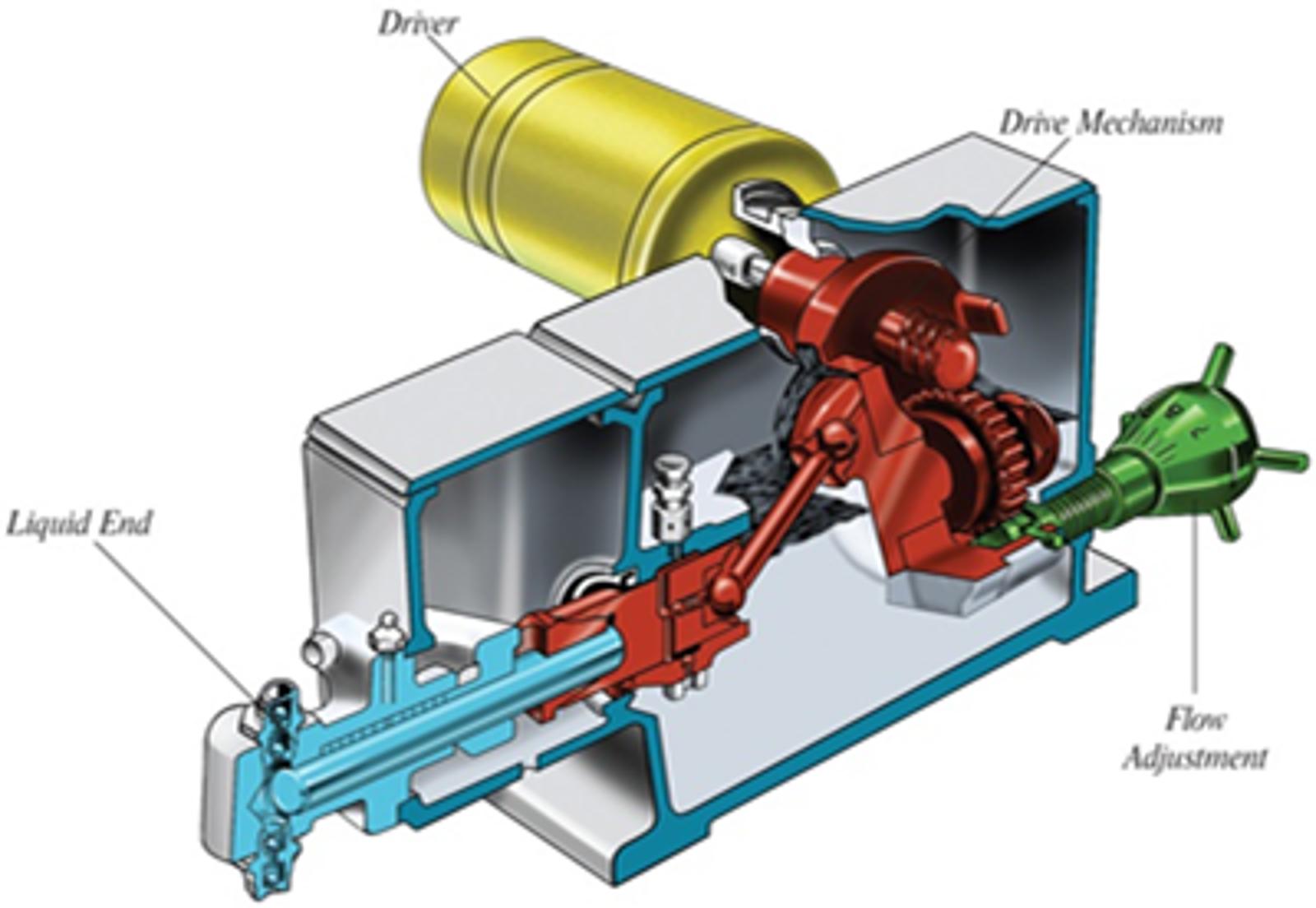
The MAD operating principle is defined by a direct kinematic chain linking the drive motor to the diaphragm. Rotary motion is converted into reciprocating displacement via a crankshaft and connecting rod assembly, imposing a fixed stroke profile on the diaphragm.

Because there is no hydraulic intermediary, diaphragm movement is governed strictly by mechanical geometry. This results in consistent volumetric displacement per cycle under stable conditions, but also introduces inherent mechanical constraints. In particular, the diaphragm is subjected to localized stresses at maximum deflection points, as force is not evenly distributed across its surface.

This structural characteristic defines both the performance envelope and the long-term fatigue behavior of MAD systems.
Metering Performance and Process Behavior

MAD pumps provide reliable and repeatable dosing in applications where process conditions remain relatively constant. Typical accuracy falls within a ±1–2% range, which is sufficient for a broad spectrum of industrial dosing duties.

However, because the system lacks hydraulic compensation, volumetric efficiency is directly influenced by discharge pressure. Variations in backpressure can lead to measurable deviations in flow rate, particularly in dynamic systems. For this reason, MAD pumps are best suited to steady-state processes where pressure conditions remain stable.

Flow delivery is inherently pulsatile due to the reciprocating mechanism. While acceptable in most utility-level applications, this characteristic may require consideration in processes sensitive to flow uniformity.

Pressure Envelope and Mechanical Constraints

The mechanical transmission of force, combined with non-uniform diaphragm loading, limits MAD pumps to low and moderate pressure applications. At higher pressures, increased mechanical stress accelerates diaphragm fatigue and reduces operational lifespan.

Within their defined operating range, however, these pumps provide efficient and stable performance without the complexity of hydraulic compensation systems, making them well adapted to standard industrial environments.

Reliability and Maintainability

MAD pumps are inherently simple and mechanically transparent systems, which directly translates into ease of maintenance and operational robustness.

With no hydraulic circuit to manage, there are fewer failure modes and less sensitivity to secondary variables such as oil condition or internal pressure balancing. Maintenance activities are typically focused on mechanical components and diaphragm replacement, resulting in short intervention times and reduced technical complexity.

This simplicity supports high availability in applications where rapid serviceability and low operating overhead are key requirements.

Positioning & Technical Relevance

Mechanically actuated diaphragm pumps occupy a clearly defined role within the spectrum of dosing technologies. They are not intended for extreme pressure or ultra-high-precision environments, but rather for applications where operational stability, mechanical simplicity, and cost efficiency are the primary drivers.

In such contexts, MAD pumps deliver a highly effective solution—balancing engineering reliability with practical usability, and ensuring consistent performance without unnecessary system complexity.

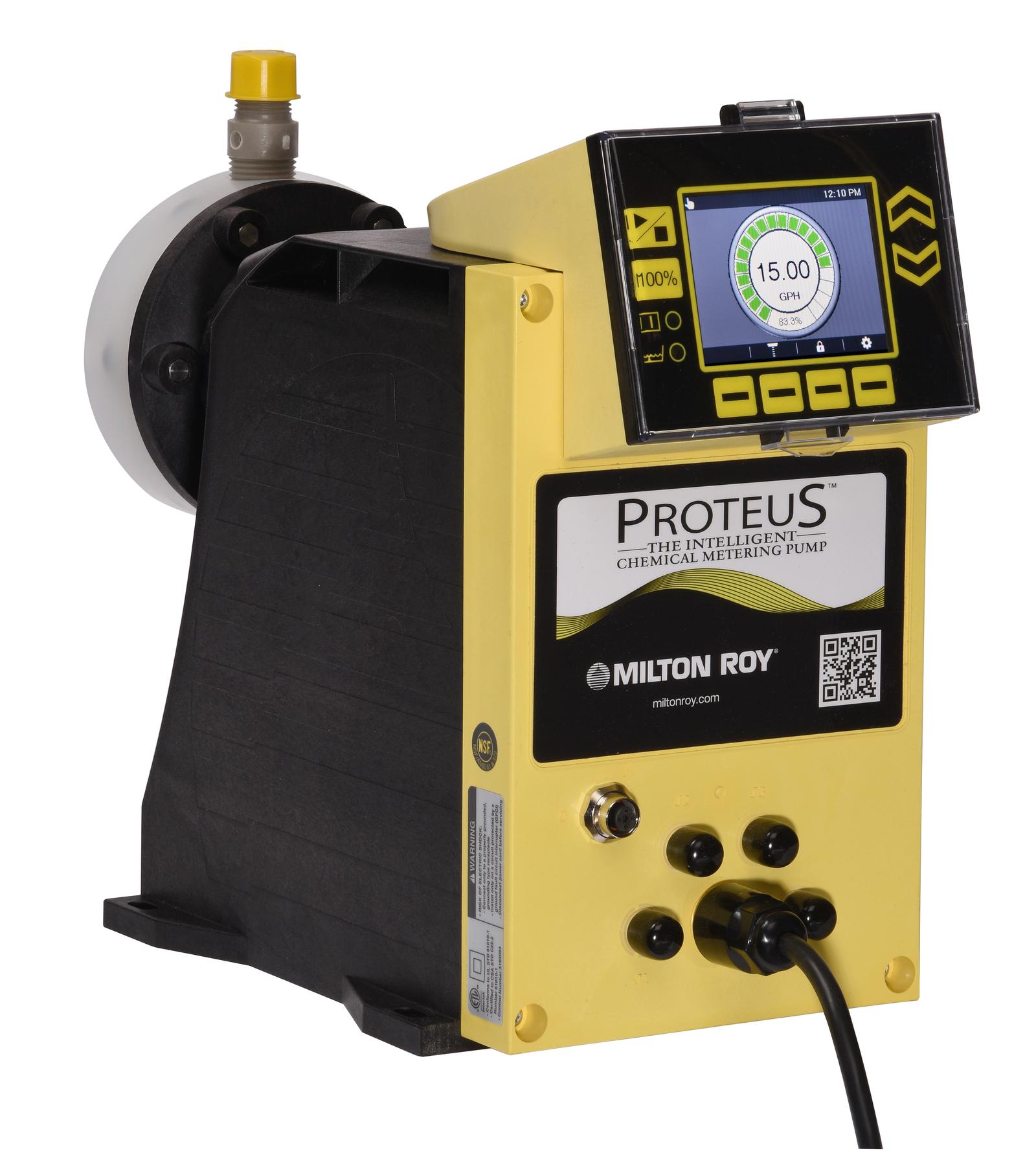
Milton Roy’s implementation of this technology reinforces this positioning, combining proven mechanical design with modern control capabilities to meet the evolving needs of industrial operators.