Mining Agitation: A Driver of Performance and Durability
Modern mining operations handle some of the most challenging fluid systems in any industry. Ore slurries often contain 40–65% solids by weight, with particle densities exceeding 3,500 kg/m³ and particle sizes ranging from sub-10 µm fines to coarse 300+ µm fractions. These slurries frequently exhibit non-Newtonian rheology — behaving as Bingham plastics or pseudoplastic fluids — which makes uniform suspension far more complex than in conventional liquid-liquid mixing.
In this context, the agitator is not an accessory — it is a process-critical asset. An effective mining agitation system must:
- Maintain off-bottom and uniform solids suspension, even at high-density loads and during draw-off conditions, to prevent sanding and ensure consistent feed to downstream processes.
- Maximize mass transfer and reaction kinetics, particularly in leaching tanks where dissolved oxygen, cyanide, or acid must contact every ore particle uniformly to achieve target extraction rates.
- Prevent sedimentation and scale buildup, reducing unplanned shutdowns and the mechanical risk of restarting an agitator in a settled tank — a scenario that can destroy shafts and gearboxes.
- Deliver controlled shear, strong enough to keep solids moving but gentle enough to preserve particle agglomerates in flocculation or carbon integrity in CIL circuits.
Why Axial-Flow, Low-Speed Agitation Outperforms in Mining
For heavy-duty mineral processing, slow-speed vertical agitators equipped with large-diameter axial-flow impellers are the industry standard — and for good reason.
- Deep axial circulation generates a strong downward pumping pattern that sweeps the entire tank volume from surface to bottom, eliminating dead zones that radial impellers typically leave beneath the shaft and near tank walls. This is essential for off-bottom suspension at high solids concentrations.
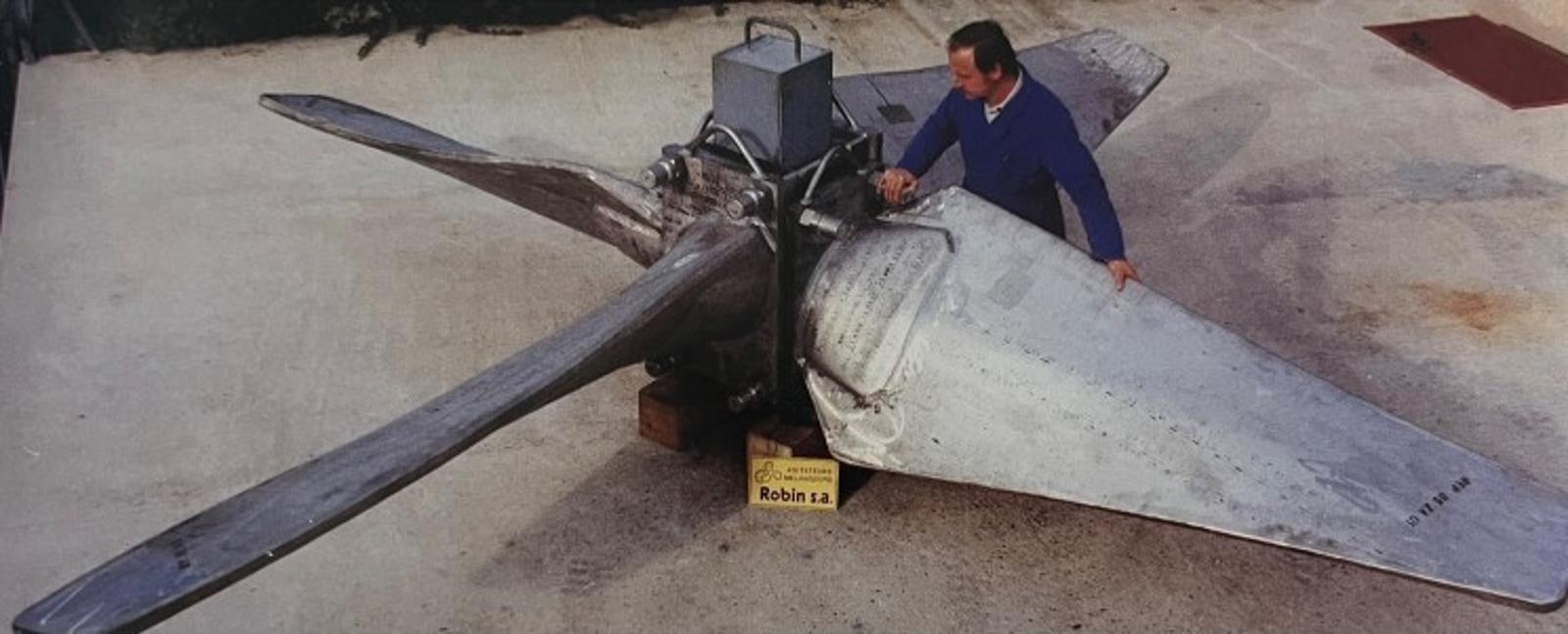
- Superior hydraulic efficiency means that axial-flow designs deliver more volumetric flow per unit of power consumed. Compared to pitched-blade turbines, modern hydrofoil impellers — such as the patented Sabre® propeller used in Milton Roy agitators — can achieve energy savings of up to 30–40% for equivalent suspension performance, significantly reducing operational expenditure over the 15–20 year life of a mining project.
- Controlled, gentle mixing protects particle integrity where it matters — preserving activated carbon granules in CIL tanks, maintaining floc structure in thickener feed wells, and preventing excessive attrition of fragile precipitates. The result is higher recovery, lower carbon replacement costs, and better separation performance.
When combined with Computational Fluid Dynamics (CFD) modeling, engineers can simulate flow fields, predict solids concentration profiles, and optimize impeller diameter, speed, number of stages, and clearance before fabrication — reducing commissioning risk and guaranteeing performance from day one
Built for Extreme Conditions: What Defines a Reliable Mining Agitator
Mining environments are among the most demanding operating conditions for rotating equipment. Agitators face continuous exposure to corrosive chemicals (cyanide, sulfuric acid, chloride-rich brines), highly abrasive slurries that erode impellers and shafts, and mechanical loads from high-density fluids that stress drive systems to their limits.
A reliable mining agitator must deliver on four fronts:
- Corrosion and abrasion resistance. Wetted components must be constructed from materials selected for the specific chemistry — duplex or super-duplex stainless steels for chloride environments, rubber-lined carbon steel for acidic slurries, titanium for extreme corrosion resistance, or specialized coatings (PVDF, ebonite, PFE) where required.
- Robust mechanical design. Separate bearing assemblies, rigid shafts designed for critical speed margins, and heavy-duty gearboxes (planetary, helical, or bevel-helical) ensure the agitator can handle the fluid forces, start-up torques in settled solids, and continuous operation without premature failure.
- Sealing integrity. From simple lip seals to double or triple mechanical seals with gas-backed pressure systems or magnetic drives, the sealing solution must match the process hazard.
- Field serviceability. In remote mine sites with limited crane access and maintenance windows, simplicity of design matters. Modular drive systems, standardized spare parts, and the ability to perform major maintenance without removing the tank roof are practical requirements that directly affect operational availability.
In operations running 24/7 for decades, mechanical reliability is not a feature — it is the fundamental condition for economic viability.
The ROBIN Advantage: Custom-Engineered for Your Process
The ROBIN series from Milton Roy Mixing represents over 50 years of expertise in designing agitators for the most severe process conditions in hydrometallurgy, chemical processing, and mineral beneficiation.
Every ROBIN agitator is custom-engineered — not selected from a catalog — to match the specific fluid behavior, solids characteristics, tank geometry, and process objectives of each application. This means the impeller type (including the patented high-efficiency Sabre® and HPM propellers), shaft length, drive configuration, materials of construction, and sealing arrangement are all tailored to deliver optimal performance at the lowest total cost of ownership.
Key capabilities of the ROBIN range:
- Tank volumes from 0.001 m³ to 100,000 m³ — covering everything from pilot-scale reactors to the largest leaching tanks in operation
- Rated power from 0.55 kW to over 1,000 kW, with impeller diameters up to 6 meters
- Operating conditions up to 500°C and 300 barg, with full vacuum capability
- Multiple mounting options: top-entry, bottom-entry, or side-entry, in vertical or tilted configurations, with up to 3 agitators per tank
- ATEX-certified construction for hazardous environments
- CFD-validated design for every installation, ensuring predicted performance matches real-world results
Whether you’re handling aggressive chemicals, managing slurry stability, or optimizing leaching efficiency, your ROBIN may look different, and that’s exactly the point! Custom design ensures the right performance, where it matters most.