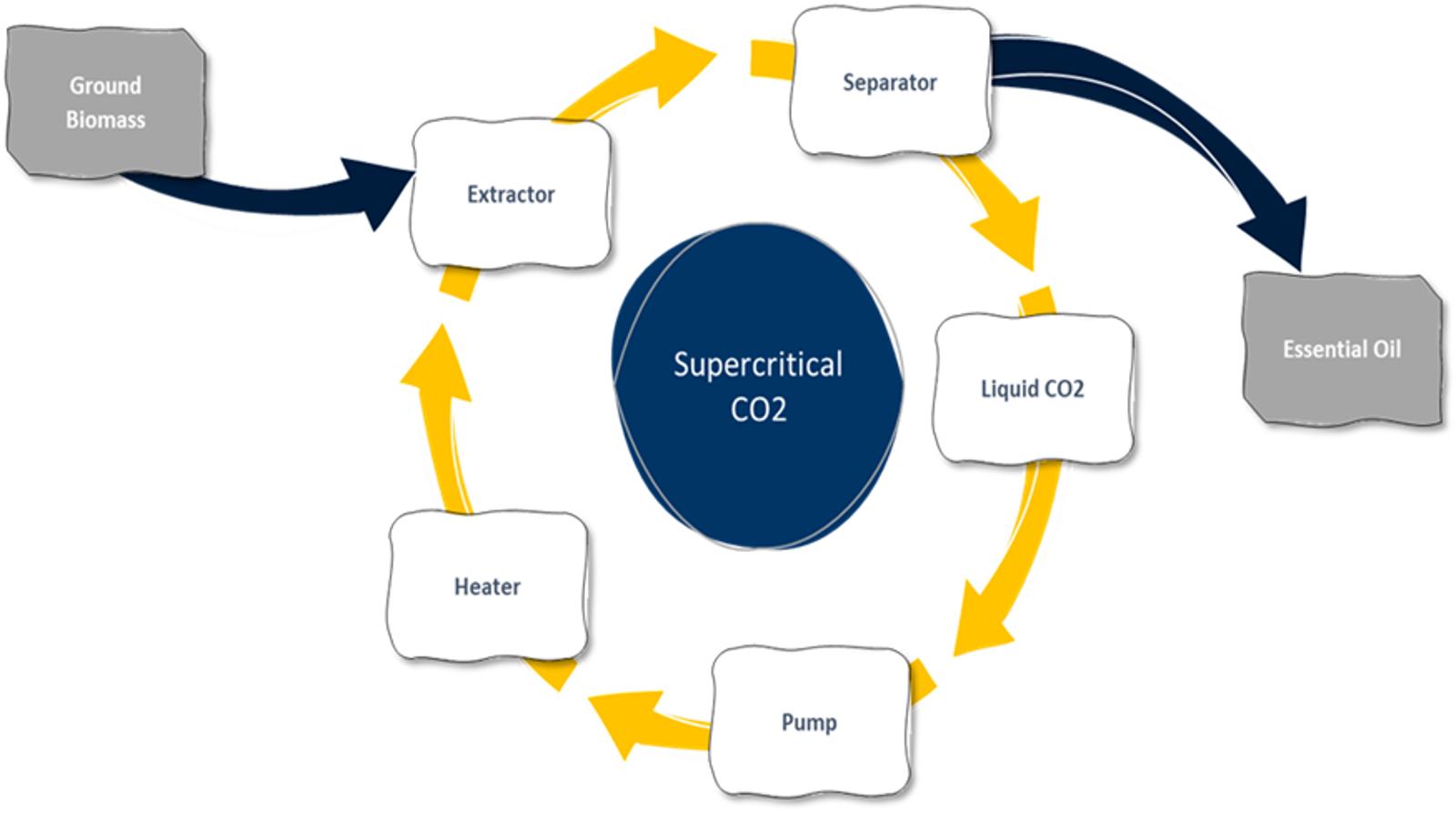
After the extracted compounds are removed, the carbon dioxide continues through the recovery portion of the system. The CO₂ is cooled and condensed back into liquid form so it can be reused within the process loop. Recycling the CO₂ significantly reduces operating costs while improving process sustainability and minimizing waste.
Because the system operates in a closed loop, carbon dioxide consumption remains relatively low compared to open solvent extraction methods, supporting both environmental and operational efficiency goals.
The reliability of this stage depends entirely on the cold side of the system. Condensing CO₂ back to a stable liquid requires precise, sustained cooling — if the process fluid runs warm or the temperature fluctuates, the high-pressure pump is forced to handle vapor-phase CO₂, starving flow and stalling the loop. Consistent sub-zero cooling is what keeps recovery efficient, cycle times short, and CO₂ loss to a minimum.
That same cold infrastructure drives the winterization step downstream of extraction, where crude extract is dissolved in ethanol and chilled to between −20 °C and −80 °C to crash out fats, waxes, and lipids before distillation. Both duties — CO₂ condensation and winterization — demand precise ultra-low-temperature control, not just nominal refrigeration capacity. This is where the extraction line hands off from precision pumping to precision chilling: Milton Roy pumps hold the CO₂ and solvent flow stable through the loop, while purpose-built chillers hold the process fluid at the exact set point condensation and winterization require.