Products
Metering Pumps
Process Pumps
Mixers
Systems & Skids
Electronics and Metering
Valves and Accessories
Industries & Applications
Water Treatment
Energy
Mining & Mineral Processing
Chemical Industry
General industry
Technology
Metering Pump Technology
Metering Pump Principles
Resources
Document Library
White Paper
Case Studies
Webinars on Demand
Digital Support Files
Certifications
Milton Roy YouTube Channel
Sales Terms & Conditions
About Us & Support
Spare Parts Inventory
CARE Maintenance Plans
News
Careers

Renewable Natural Gas (RNG) — also called biomethane or sustainable natural gas (SNG) — is the upgraded form of biogas produced when microorganisms break down organic matter in the absence of oxygen. Agricultural manure, food and beverage waste, wastewater biosolids, landfill gas and purpose-grown energy crops are first converted into raw biogas — typically 50–65% methane, 35–50% CO₂, plus 100–10,000+ ppm hydrogen sulfide and trace contaminants — then cleaned and concentrated to >96–98% CH₄ so it can be injected into the natural gas grid or dispensed as vehicle fuel. 

The digester and the upgrading skid get attention. But methane yield, gas quality, uptime and operating cost are decided by a quieter layer running underneath the whole plant: chemistry and dosing. Nutrient and alkalinity control determine how much gas biology produces. Sulfide controls decide whether your compressors and membranes survive. Polymer dosing decides how much you pay to haul digestate. Upgrading-side chemistry decides methane recovery and asset life. Small deviations upstream become large costs downstream.

What Is Renewable Natural Gas?

RNG is produced by capturing biogas generated when microorganisms break down organic matter in oxygen-free environments, then upgrading that biogas to >97% CH₄ pipeline specification.

Three primary biogas sources:

  1. Agricultural waste — Livestock manure, crop residues, energy crops, and food-processing waste digested in anaerobic digesters (AD), producing raw biogas typically composed of 50–70% CH₄, 30–50% CO₂, plus trace H₂S (100–5,000 ppm), ammonia, siloxanes, and water vapor.
  2. Landfill gas (LFG) — Methane and CO₂ released by decomposing municipal solid waste, captured through landfill collection wells; characteristically higher in siloxanes and VOCs.
  3. Wastewater treatment — Sewage sludge digestion at municipal WWTPs producing digester gas as a valuable byproduct of biological treatment.

Upgrading then removes CO₂, H₂S, siloxanes, VOCs, ammonia, and moisture to deliver biomethane that meets pipeline injection specifications (e.g., AGA, GPA 2261, EASEE-gas, EN 16723-1/2) — and to qualify for environmental credit programs (RIN D3/D5, LCFS, RTFC, GoO).
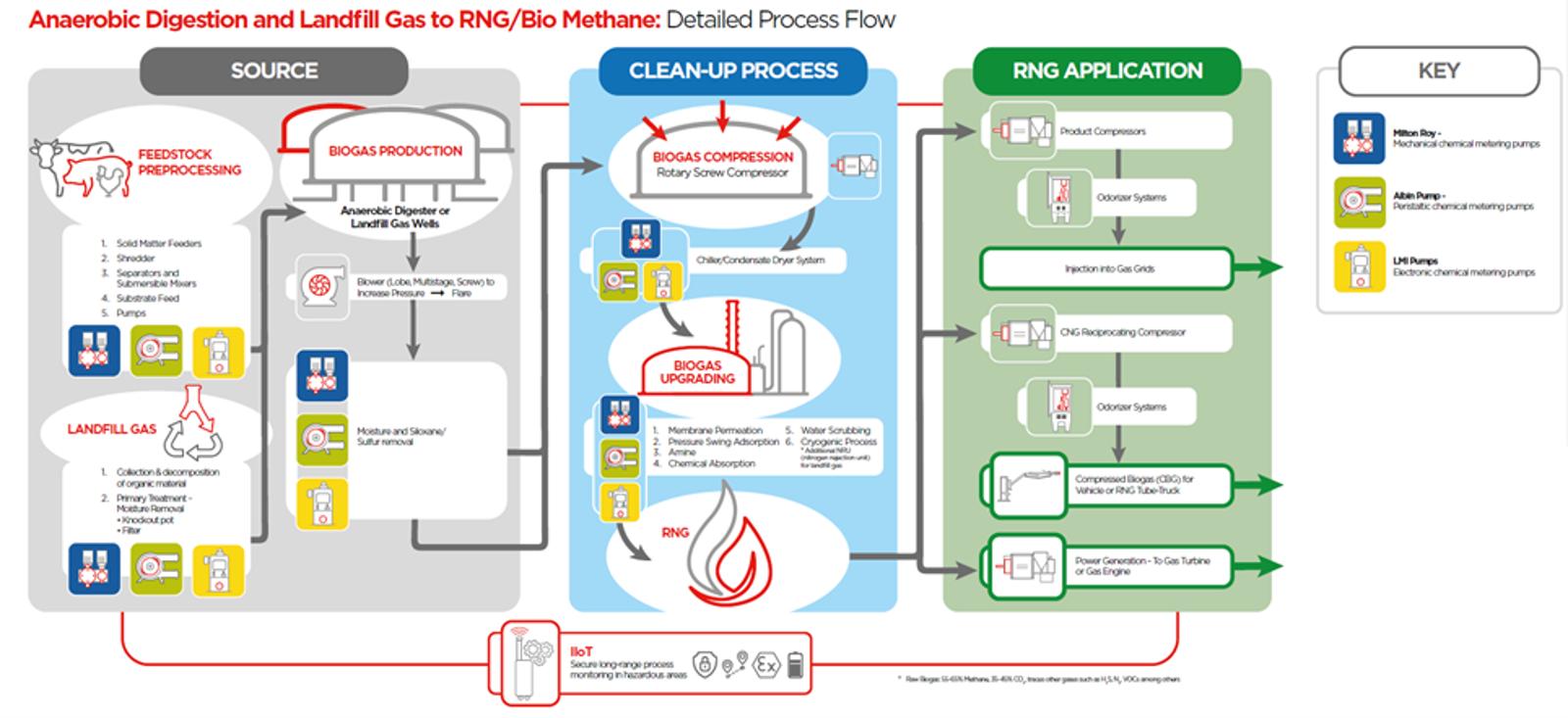
Stage-by-stage, the integrated RNG process — Where Chemical Dosing Drives Yield, Uptime & Gas Quality

Consistent biological loading starts with consistent feeding. Manure, source-separated organics, food waste, sludge and industrial organics must be macerated, blended and fed at a controlled organic loading rate (OLR) of ~2–4 kg VS/m³·day with a hydraulic retention time (HRT) of 20–40 days for mesophilic digestion. Shock loads and swings in solids content are the most common triggers of VFA accumulation and souring. 

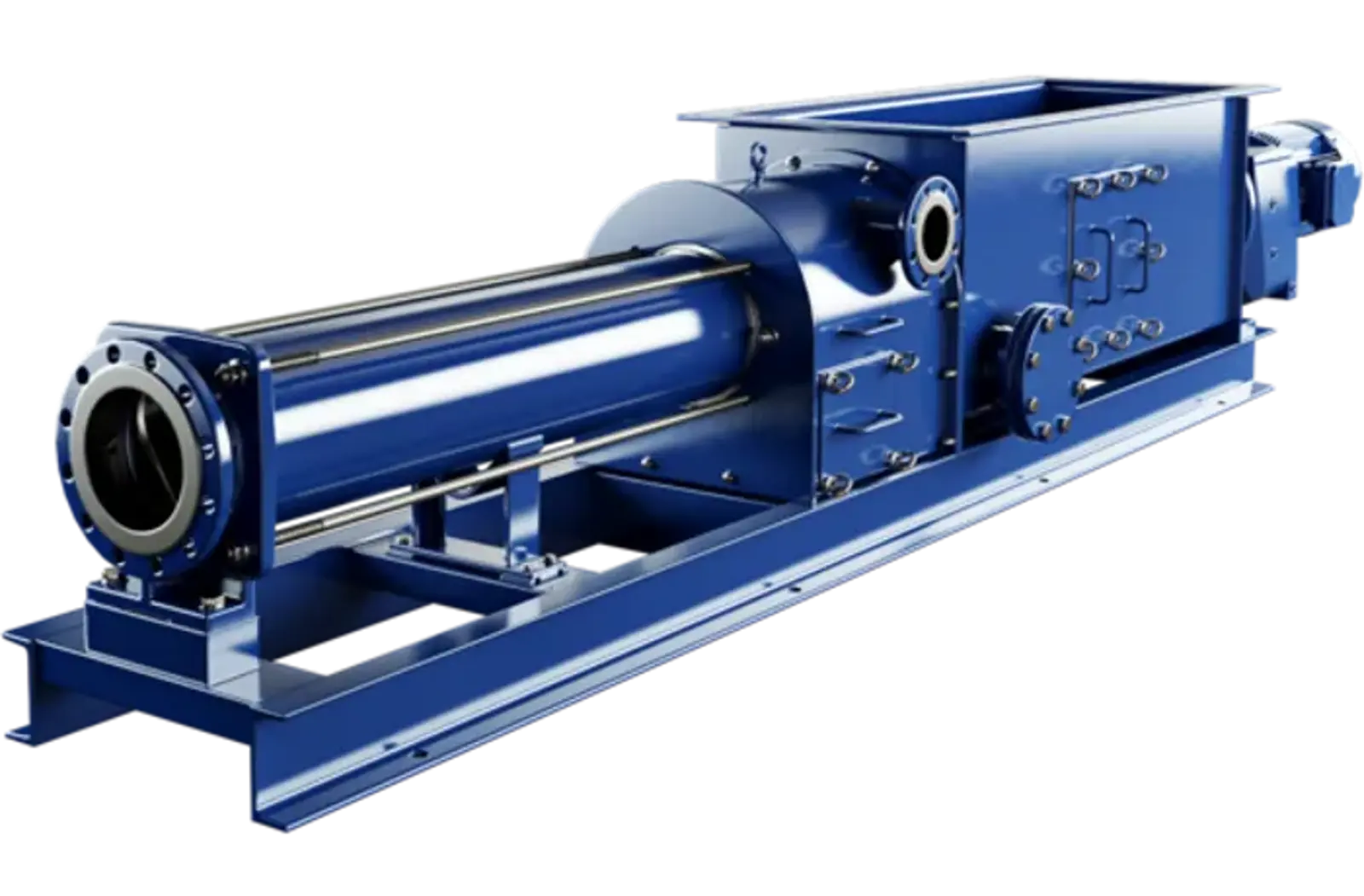
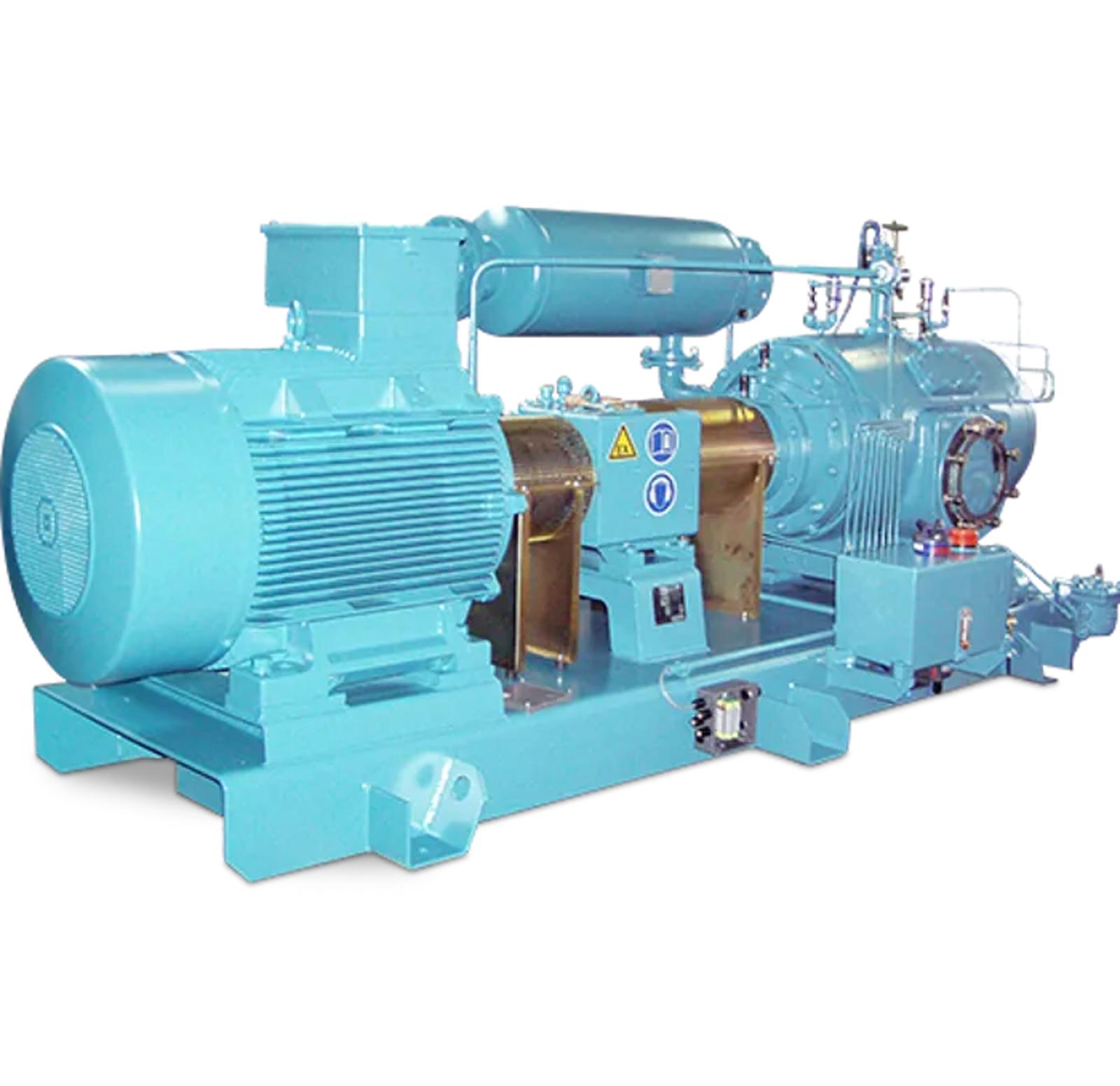
Seepex leads this stage with progressive cavity and BTEX hopper pumps engineered for fermentation feedstocks. The reinforced BTEX design conveys 20–160 m³/h (90–700 US GPM) up to 8 bar (120 psi), lets contaminants settle at the hopper base for quick removal, and delivers balanced premixing that cuts fermenter retention time. Milton Roy's contribution begins where chemistry begins — nutrient and additive dosing into the feed line. 

BTEX – Robust Hopper Pump for Extreme Conditions

RNG-process-map

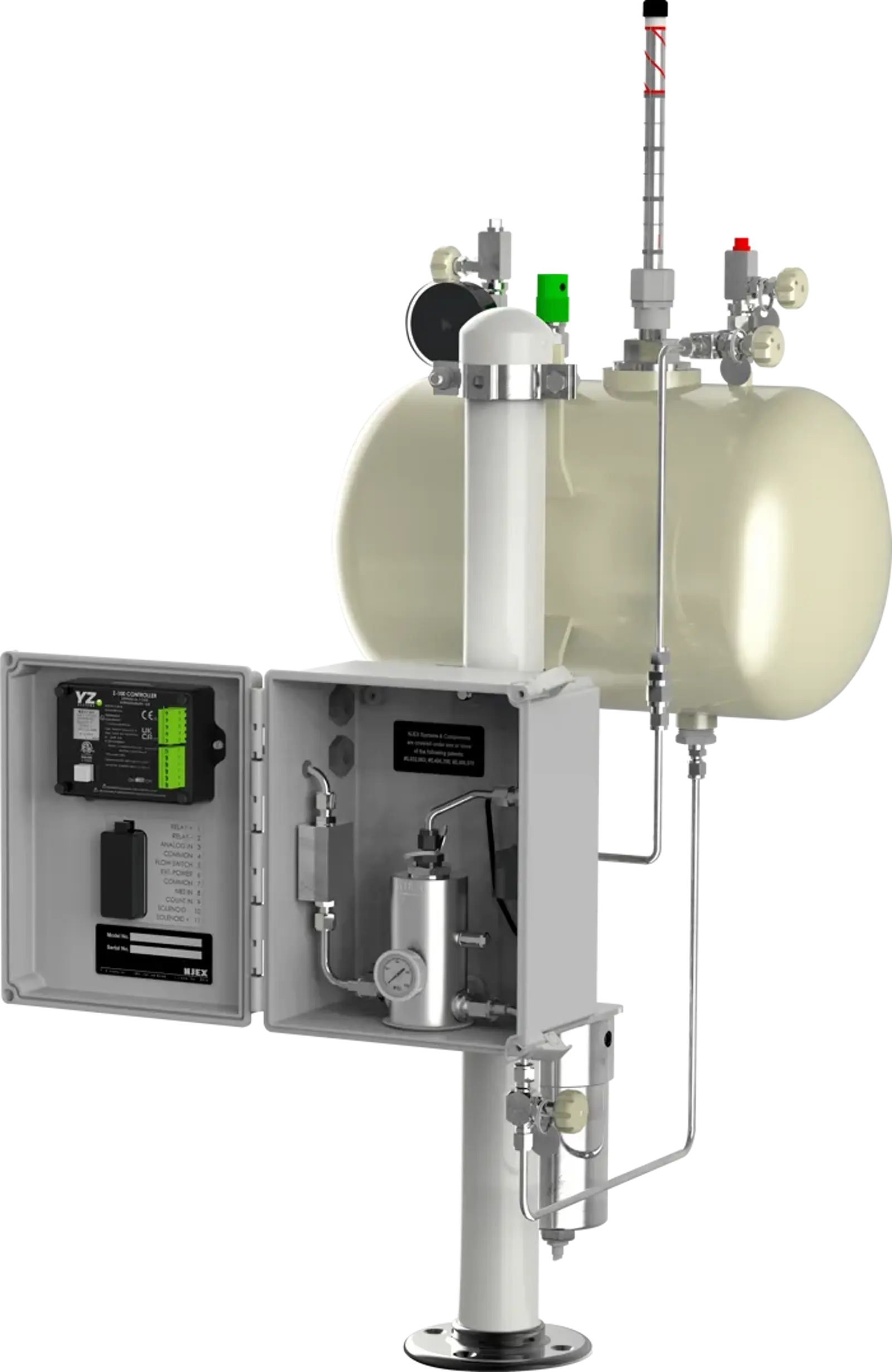
Odorizing the Energy Transition: From Biomethane to the Grid

As biomethane and RNG scale up, odorization has never been more important — or more challenging, with injection rates swinging from a few to several thousand Nm³/h. Explore how renewable gas differs from conventional natural gas, and how the right odorization approach keeps biogas upgrading facilities safe, compliant and grid-ready.