Products
Metering Pumps
Process Pumps
Mixers
Systems & Skids
Electronics and Metering
Valves and Accessories
Industries & Applications
Water Treatment
Energy
Pyrolysis Plastics Recycling
Lithium Mining
Essential Pil Extraction
Palm Oil Production
Technology
Water Treatment
Energy
General Industry
Metering Pump Technology
Metering Pump Principles
Petrochemical Industry
Aftermarket & Support
CARE Maintenance Plans
Spare Parts Inventory
Resources
White Paper
Case Studies
Webinars on Demand
Digital Support Files
Certifications
Milton Roy YouTube Channel
Sales Terms & Conditions
About Us
News
Knowledge Hub
Careers
Sign Up for Newsletter

Bottom Sediment and Water, universally known as BS&W, is one of the most persistent and costly operational challenges in crude oil storage and transportation. It refers to the accumulation of water, sand, salt, wax, asphaltenes, and other non-hydrocarbon impurities that naturally settle to the bottom of storage tanks over time, forming a dense sludge layer that progressively degrades tank capacity, equipment integrity, and oil quality.

Despite its prevalence, BS&W is often treated as an inevitable maintenance problem rather than a preventable process condition. This page examines the physics behind BS&W formation, quantifies its operational and financial impact, and explains why continuous mechanical mixing is the most effective strategy for keeping crude oil tanks clean, productive, and safe.

What Is BS&W and How Does It Form?

Crude oil is never pure. From the wellhead through pipelines, vessels, and terminal storage, it carries a complex mixture of entrained solids and water. Sand and clay particles originate from the reservoir formation. Salt and brine are produced alongside the oil. Water is frequently injected upstream to improve flow assurance in long-distance pipelines. Waxes and asphaltenes — heavy molecular fractions naturally present in crude — precipitate as temperature and pressure conditions change during transportation and storage. 

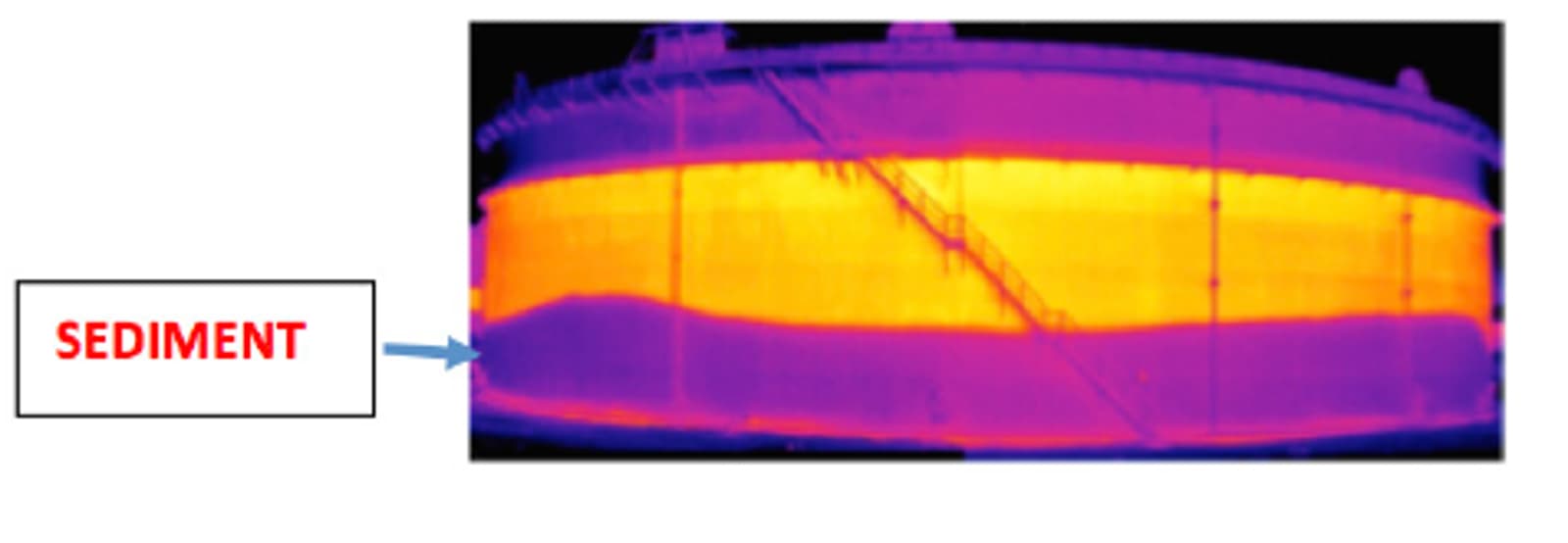
Inside a storage tank, gravity does the rest. Solids and water, being denser than the oil phase, migrate downward and accumulate on the tank floor. Over weeks and months, this material compacts into an increasingly dense, immobile layer — a process the industry calls"sanding-in." Left unmanaged, this layer can grow to occupy 10–30% of the tank's nominal volume, effectively converting productive storage capacity into dead space.

The problem compounds with unconventional and heavy crude grades. These lower-API oils carry higher concentrations of asphaltenes, resins, and fine solids, accelerating sludge formation rates dramatically compared to lighter, conventional crudes such as WTI (West Texas Intermediate) or Brent.
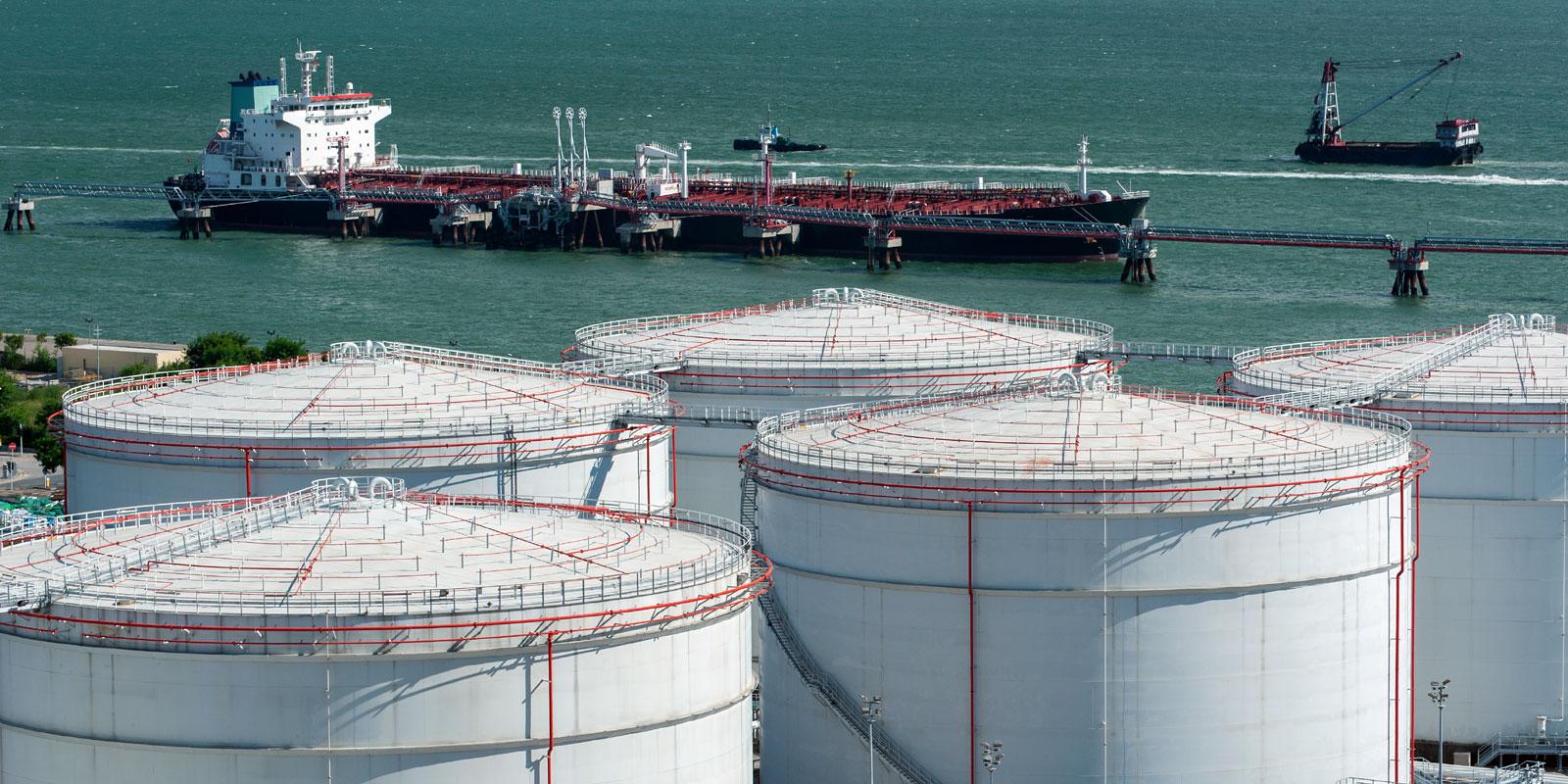
Crude Oil Storage Tanks

The Real Cost of Uncontrolled BS&W

BS&W is not merely an inconvenience, it is a significant financial and operational liability that affects every dimension of terminal operations.

  • Reduced storage capacity is the most visible impact.
    As sludge accumulates, the effective working volume of the tank decreases. For a 100,000-barrel tank with 15% sludge buildup, that represents 15,000 barrels of lost capacity — a direct hit to throughput flexibility and inventory management.
  • Equipment damage is the most expensive consequence.
    When crude is pumped out of a tank with significant BS&W accumulation, the entrained solids and water pass through transfer pumps, control valves, heat exchangers, and instrumentation — accelerating erosion, corrosion, and fouling across the entire downstream chain. Pump seal failures, valve seat erosion, and meter fouling are all directly attributable to uncontrolled BS&W.
  • Corrosion risk is the most dangerous.
    Pockets of settled saltwater in direct contact with the tank floor create aggressive electrochemical corrosion cells. Over time, this under-deposit corrosion can compromise tank bottom plate integrity — in extreme cases leading to tank floor perforation, environmental spills, and regulatory shutdowns.
  • Tank cleaning is the most disruptive.
    When sludge accumulation reaches critical levels, the only recourse is a full tank decommissioning: the product must be transferred out, the tank gas-freed and ventilated, and the sludge physically removed — often by confined-space crews working in hazardous conditions. A single major cleaning operation on a large crude storage tank can cost $500,000 to over $2 million, take weeks to complete, and generate significant volumes of hazardous waste requiring specialized disposal. ]
  • Oil quality degradation closes the loop.
    Inhomogeneous crude — with varying water cuts, sediment loads, and API gravity across the tank profile — produces inconsistent refinery feed, disrupting desalter performance, increasing corrosion in distillation columns, and reducing product yield.

How Mixing Prevents BS&W: The Engineering Principle

The physics of BS&W prevention is straightforward: if the fluid velocity at every point in the tank exceeds the settling velocity of the heaviest particles present, nothing accumulates. Continuous mechanical mixing maintains solids and water in homogeneous suspension throughout the entire tank volume, eliminating the gravitational separation that drives sludge formation.

The challenge is practical. Crude oil storage tanks are among the largest vessels in industrial service — commonly 30 to 120 metres in diameter, with volumes ranging from 50,000 to over 1,000,000 barrels. Most are equipped with floating roofs, which physically prevent the installation of top-entry agitators. 

The only viable mixing approach is side-entry agitation: compact, powerful mixers mounted through nozzles in the tank shell, generating a horizontal liquid jet strong enough to sweep the entire tank floor. 

The effectiveness of a side-entry mixing system depends on three critical design parameters:

  • Jet reach. The impeller must generate a flow with sufficient momentum to traverse the full tank diameter — distances of 60 metres or more in large terminals. This requires a high-efficiency impeller capable of converting motor power into a coherent, long-distance liquid jet with minimal energy dissipation.
  • Bottom sweep. The flow pattern must contact the tank floor across its entire surface area. This is achieved through strategic angular positioning of the mixer (typically angled 10°–15° below horizontal) and, in larger tanks, through periodic swivel adjustments that redirect the flow to cover different floor sectors over a monthly cycle. 
  • Multiple mixer coordination. In tanks above 60–80 metres in diameter, a single mixer cannot maintain adequate velocity across the full volume. Multiple side-entry units are installed — critically, positioned on the same quadrant of the tank — so that their individual flows combine into a single, powerful circulation pattern rather than opposing and cancelling each other.

BS&W Measurement and Industry Standards

BS&W content is measured as a volume percentage of the total crude oil sample, using standardized laboratory methods. The two most widely referenced standards are ASTM D4007 (centrifuge method) and ASTM D96 (centrifuge method for crude petroleum). Inline BS&W analyzers using microwave, capacitance, or near-infrared technology are also deployed at custody transfer points for real-time monitoring.

Most pipeline tariffs and refinery intake specifications impose BS&W limits — typically 0.5% maximum for pipeline-quality crude, with tighter limits (0.2–0.3%) for premium grades and custody transfer. Exceeding these limits triggers quality deductions, rejected shipments, or forced reprocessing — all of which carry significant financial penalties.

Continuous mixing is the most reliable method for maintaining BS&W below specification limits throughout the storage cycle, ensuring that every barrel pumped out of the tank meets quality requirements without the need for dedicated dewatering or settling operations.