The Five Stages of Desalination, and Why Chemical Dosing Matters at Every One
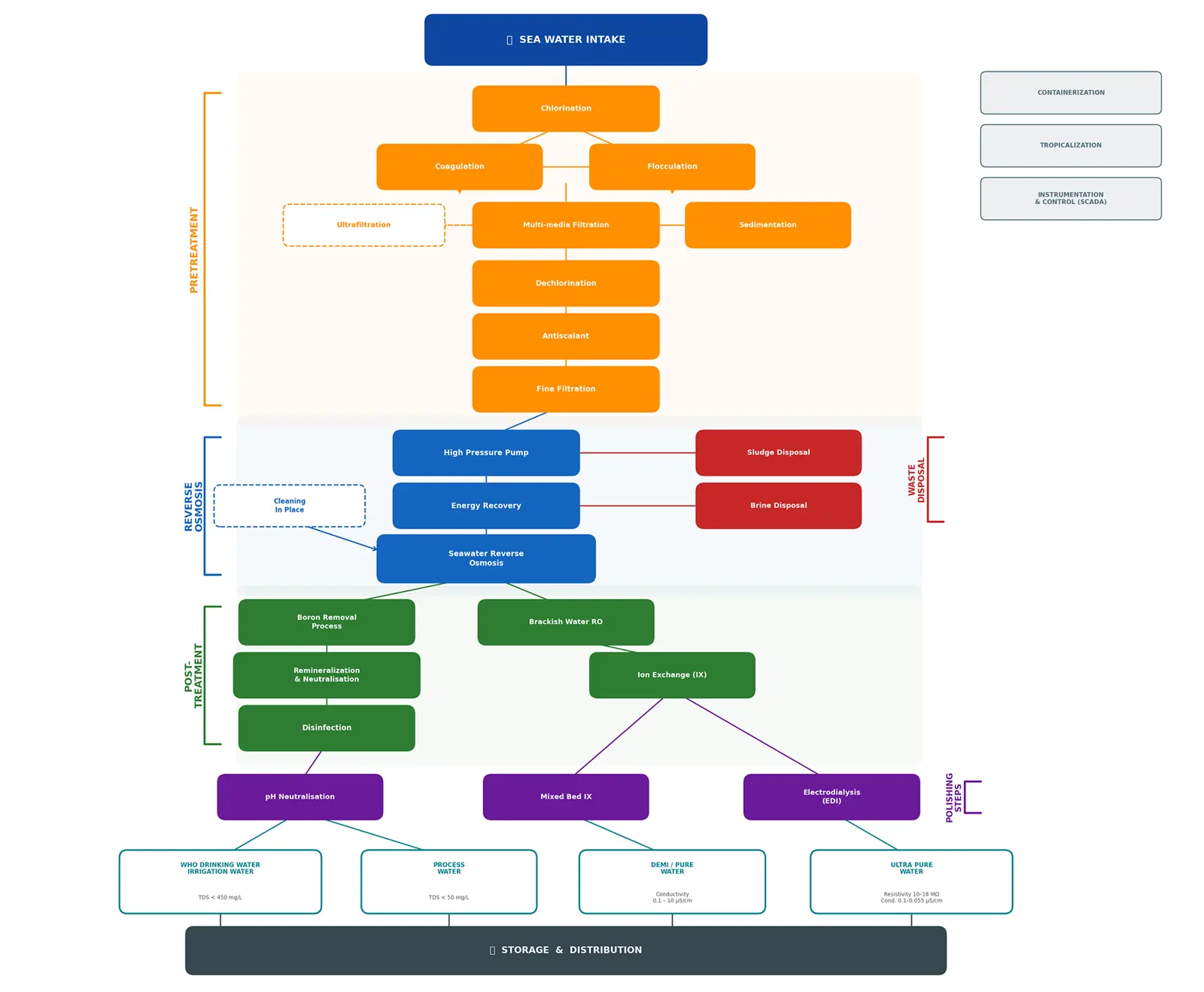
A desalination plant is not a single process. It is a treatment chain built across five distinct stages, each with its own chemical dosing requirements:
- Intake: Getting water from its source to the processing facility. Chemical dosing begins here with disinfection to control biological growth before the water even enters the plant.
- Pretreatment: Removing suspended solids, organic matter, and colloidal particles to prepare the water for membrane processing. This stage is determining for plant lifetime and is the single most important factor in minimizing chemical cleaning frequency and membrane replacement costs.
- Desalination (RO): Removing dissolved solids — primarily salts and inorganic matter — through reverse osmosis membranes. Anti-scalant and dechlorination dosing protect the membranes during this critical separation step.
- Post-treatment: Adding chemicals to desalinated water to prevent corrosion of downstream infrastructure, adjust mineral content, and ensure the water meets drinking or process water specifications.
- Concentrate management and freshwater storage: Handling and disposing or reusing the brine waste from the desalination process and storing freshwater before distribution.
The majority of technological advancements have occurred at Stage 3 but scaling and fouling remain among the main causes of RO plant failure — problems that originate in Stages 1 and 2 when chemical dosing is inconsistent or improperly controlled.